Search isn’t dying — it’s just moving to your feed.
For two decades, “Google it” was the default answer to every question. But in 2025, te way people search is shifting — and it’s bad news for search engines, but massive news for marketers.
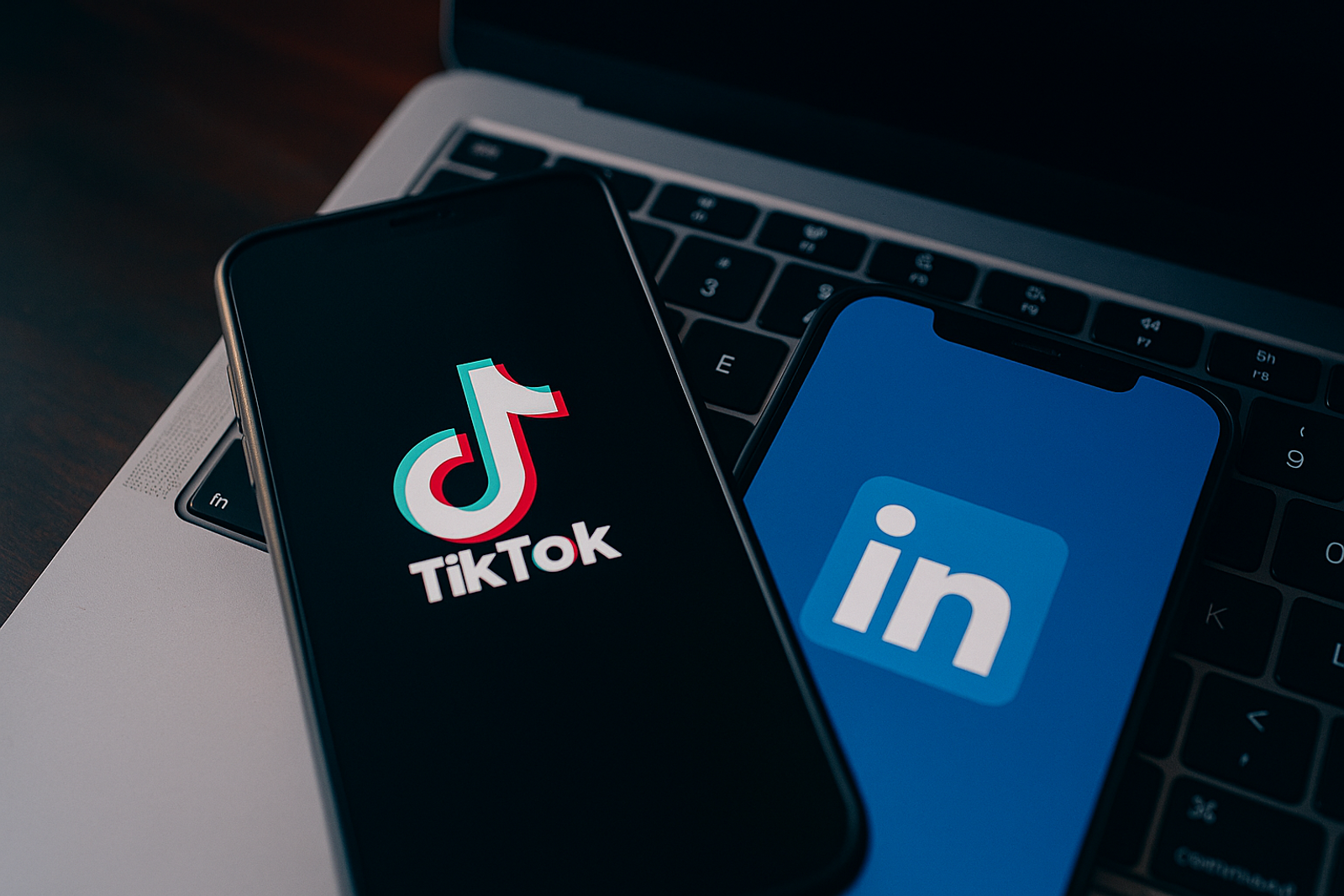
Instead of typing queries into Google, more and more people are going inside social platforms like TikTok and LinkedIn. Why? Because they don’t want static results. They want real people, real recommendations, and real context.
Here’s why Social SEO is the new battleground — and how smart brands are already adapting.
1. People Trust People, Not Websites
A TikTok search for “best running shoes” won’t take you to a faceless blog post stuffed with keywords. It shows real runners breaking down what they use, how it fits, and why it works.
In a world overloaded with polished brand content, trust beats authority every time.
2. Social Search Is Visual and Instant
Google results = text and links. Social results = videos, carousels, infographics.
It’s faster to consume, easier to compare, and more aligned with how people naturally scroll. The feed has become the search engine.
3. LinkedIn Is Quietly Becoming B2B’s Search Engine
If you’re looking for an agency, SaaS tool, or growth consultant, LinkedIn is where you’ll find them. Social proof — comments, likes, reposts — acts like a ranking system. The more visible and engaged a post is, the more credible the recommendation feels.
For B2B, LinkedIn search is fast becoming the front door.
4. Algorithms Reward Recency, Not Just Relevance
Unlike Google, which favours history and backlinks, social search rewards freshness. The newest posts climb to the top — meaning smaller brands can beat bigger ones without decades of domain authority.
It’s a leveller. Creativity and timing now matter as much as reputation.
5. Social SEO = A Content Strategy Shift
Optimising for social search means thinking differently:
- Write hooks in captions and on-screen text.
- Use phrases your audience would actually type.
- Structure posts like answers, not just vibes.
This isn’t about keyword stuffing. It’s about creating content that feels natural, searchable, and scroll-stopping.
6. TikTok Is Becoming Gen Z’s Google
Younger audiences now prefer TikTok over Google for everything from restaurants to “how do I fix this Excel formula?” The platform doesn’t just give you an answer — it gives you a person walking you through it.
That human layer makes it stick. And for marketers, discoverability now means showing up in the right niche conversations with content people actually want to watch.
7. The Rise of Micro-Influencer SERPs
Creators are the new Page One. Instead of blog articles from big publishers, people turn to micro-influencers who have credibility in their niche.
For brands, this means stop thinking like advertisers and start thinking like collaborators. Your best chance of ranking might be through creators who already own that conversation.
8. The Metrics That Actually Matter Now
Forget backlinks and bounce rates. In Social SEO, the new metrics are:
- Saves and shares = long-tail ranking power.
- Comments = social proof that fuels visibility.
- Video completion rate = the new dwell time.
These signals keep your content discoverable long after it’s posted.
9. The Big Advantage for Challenger Brands
Traditional SEO favoured the giants. Social SEO flips the game. A small brand with a clever TikTok can outrank a Fortune 500 tomorrow.
Budget matters less than creativity, speed, and cultural relevance. Challenger brands finally have the edge.
10. So, What Should You Do?
- Audit how your brand already shows up in TikTok, LinkedIn, and Instagram search.
- Experiment with Q&A-style posts that answer real questions.
- Optimise for natural language and engagement signals, not just keywords.
The takeaway: Google isn’t dead, but it’s no longer the only place people search. If your strategy still looks like it did in 2015, you’re invisible where discovery actually happens in 2025.