On this page
Per-seat pricing has a quiet failure mode for anyone running approvals: the people who approve content outnumber the people who create it. Add a client contact here, a regional manager there, a compliance reviewer for the regulated account, and your software bill grows with every workflow improvement you make.
The result is predictable. Teams ration seats, reviewers share logins, and approvals drift back to email because email is free.
Why seats and approvers are a bad match
A seat model prices everyone like a power user. But an approver might spend two minutes a week in the tool. Paying a full seat for that usage never feels right, so organizations under-license, and the approval workflow, the thing that protects the brand, is the first corner cut.
The alternative: approval by link
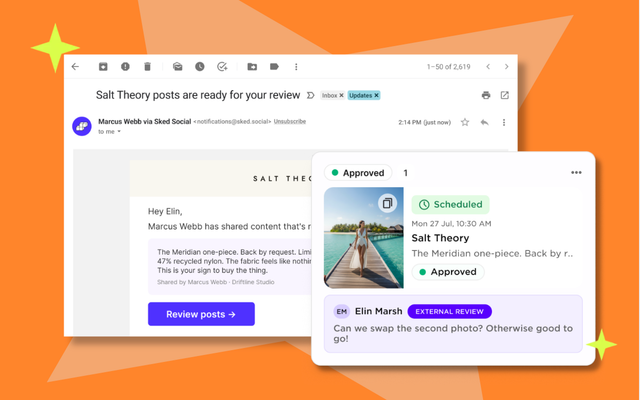
Sked takes a different approach: external reviewers approve through a shared branded link rather than a paid login. A client or regional manager opens the link, reviews the post as it will publish, and approves or leaves feedback from their phone. Reviewing content does not require renting them a seat, and pricing scales with the accounts you manage, which keeps the bill predictable as the team grows. See the full breakdown on the agency overview.
Doing the math against your current tool
Count the people who touch content in any month: creators, sure, but also every approver on every account. Price that head count on your current tool, then compare it with account-based pricing. For a side-by-side against the most common incumbent, see Sked versus Hootsuite.
Common questions
Good questions.
Do approvers count as paid seats in Sked?
External reviewers approve through a shared link, not a paid login, so a client or regional manager who only reviews content does not need their own seat.
How does Sked's pricing scale?
Pricing scales with the accounts you manage rather than punishing you for adding teammates, which keeps costs predictable as your team or client list grows. Start with the 14-day free trial to model it against your current bill.