Stop judging your content after one post.
Elle Kress on the six-month rule she won't budge on, why AI should never be your source of truth, and the one-page trick behind every good founder story.
By Lach Bradford · July 29, 2026
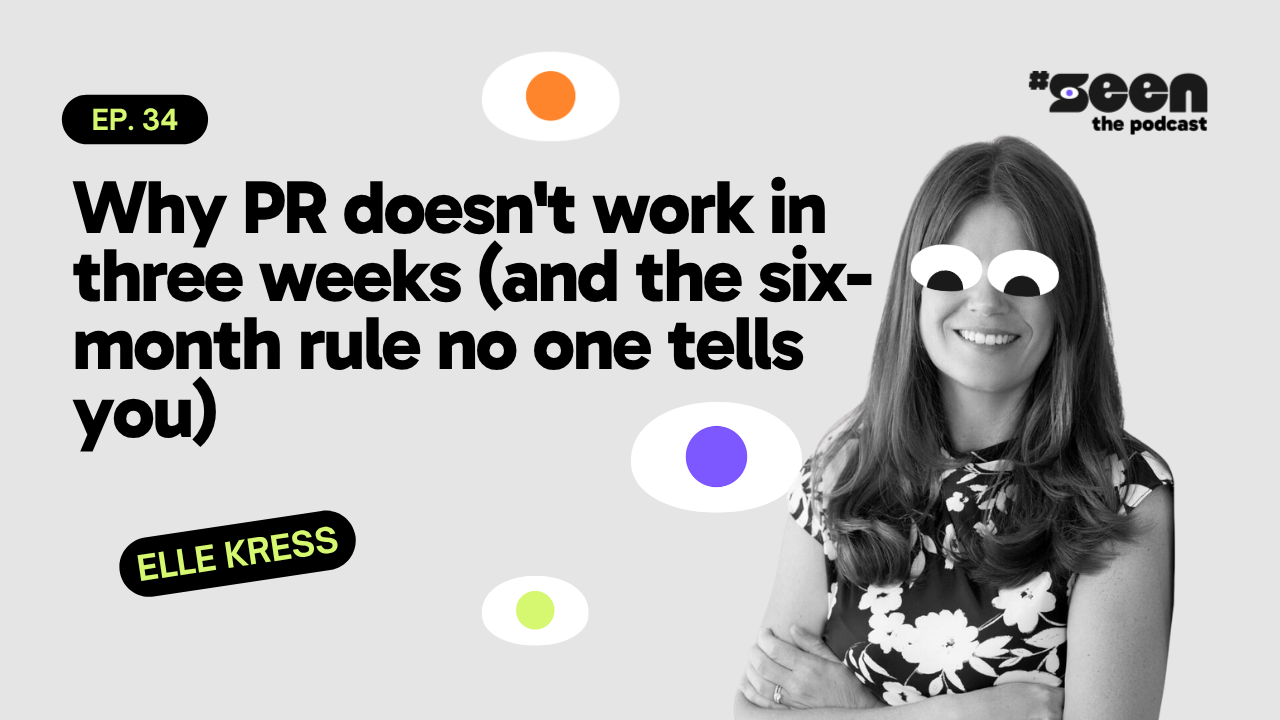
I sat down with Elle Kress this week, and even though her day job is PR (not social), the rule she lives by is one every social and marketing manager should steal.
She runs Hey Good News PR, works with founders from seed through Series C, and won't sign a client for less than six months.
Her reasoning has nothing to do with contracts and everything to do with how coverage, and content, actually compounds: a press release isn't the finish line. It's the launching pad for everything that comes after it.
Swap "press release" for "campaign," "content series," or even "that one post you were proud of," and the lesson holds exactly the same.
Most founders quit before the launching pad gets used. So do most content calendars.
A press release isn't the finish line. It's the launching pad.
Elle's line was blunt: the best PR happens when you focus six months on it. You get a big media release out, land great coverage, and then use that as a launching pad for ongoing media, not a one-off announcement that fades in a week.
Sound familiar? It's the same mistake as posting one great piece of content, watching it perform, and then moving on to the next idea instead of building on what just worked. Founders don't always realise how important that follow-through is, because the first hit of coverage (or the first viral post) feels like the win. It isn't. It's the opening.
The practical version of this: before any of that six-month work starts, Elle sits down with every founder for a proper brainstorm – motivation, story to date, the problem they're solving – and gets the whole thing onto a single A4 sheet. It's the same discipline as nailing your content pillars before you touch a content calendar. Skip it, and every post becomes its own tiny negotiation about what you're actually trying to say.
AI will refine you into nobody if you let it.
AI has transformed her workflow, by her own account – she uses it daily, mostly for research and catching blind spots in a strategy. What she won't do is trust it completely. It once suggested a journalist for a pitch that she personally knew would never touch the topic.
"AI has absolutely transformed how we work as a profession. But I never use it as, this is 100% right, because it's definitely not 100% right."
Translate that into your world: AI can draft your caption, suggest your hook, even flag a trend early. It can't tell you whether your specific audience will actually care. That judgement call still needs a human who knows the room.
Media training isn't a nice-to-have, it's quarter one.
Within the first quarter of any engagement, Elle runs a half-day media training session, playing journalist herself, working through hard questions and key messages before a founder ever sits in front of a real reporter. Most of her clients have never done a proper media interview before working with her.
The social equivalent: pressure-testing your brand voice and key messages before a crisis comment thread or a viral moment forces you to improvise live. Build the muscle before you need it, not during.
Building in public doesn't have to be polished.
Elle pointed to a London founder who posts unscripted video daily. Her read: "Building in public is amazing. It's so authentic. It doesn't have to be polished." Her platform split is deliberate too – LinkedIn stays the professional platform, and if you want to be really vulnerable, that goes to Instagram instead.
If you're a social manager sitting on unpolished behind-the-scenes footage because it's not "brand enough" yet, this is your sign.
The loneliness problem nobody warns you about.
Outside Hey Good News, Elle runs Work Tribes, a Slack community for comms freelancers. It started as a WhatsApp thread among a handful of PR freelancers and grew because nobody tells solo operators the basics – how to do a BAS, how to structure a contract, when you've crossed from sole trader to company.
Social media managers know this one too. Solo in-house, or freelancing client to client, nobody hands you the playbook either. That's a lot of why this community exists.
Every lesson above is the same lesson in different clothes. The six-month rule is about patience. The single-page story is about clarity before speed. The AI rule is about knowing where judgement still has to sit with a human. Building in public and Work Tribes are both about choosing honesty over polish.
The whole thing is one move: a press release, a campaign, a content series, none of them are the finish line. They're the launching pad. Judge them too early, and you've wasted the runway they could have bought you.
🎧 Listen to the full conversation with Elle → https://youtu.be/l3u-tHxNRXQ
If this is the kind of thing you want in your inbox every week, you can subscribe here → https://skedsocial.com/seen-community#newsletter. Thanks for being here. The bit on Work Tribes around the 28-minute mark is the one I think will stay with you the longest.
One last thing: what's the last piece of content you gave up on too early? Reply and tell me. I read every one.
- Lach
🎧 Watch the full episode: Why PR doesn't work in three weeks (and the six-month rule no one tells you)
Let everyone post. Keep every post on-brand.
Schedule, publish, listen and report in one place, with login-free approvals for every stakeholder and client. Try Sked Social free for 14 days, no credit card required.