On this page
- Comparison isn't a side effect of the job. It's built into it.
- Being chronically online comes with a special kind of exhaustion
- One of the hardest parts of the job is feeling misunderstood
- The impact shows up in the work
- Community doesn't solve the problem. But it can improve the experience.
- The most underrated career move in social media
- Why #Seen exists
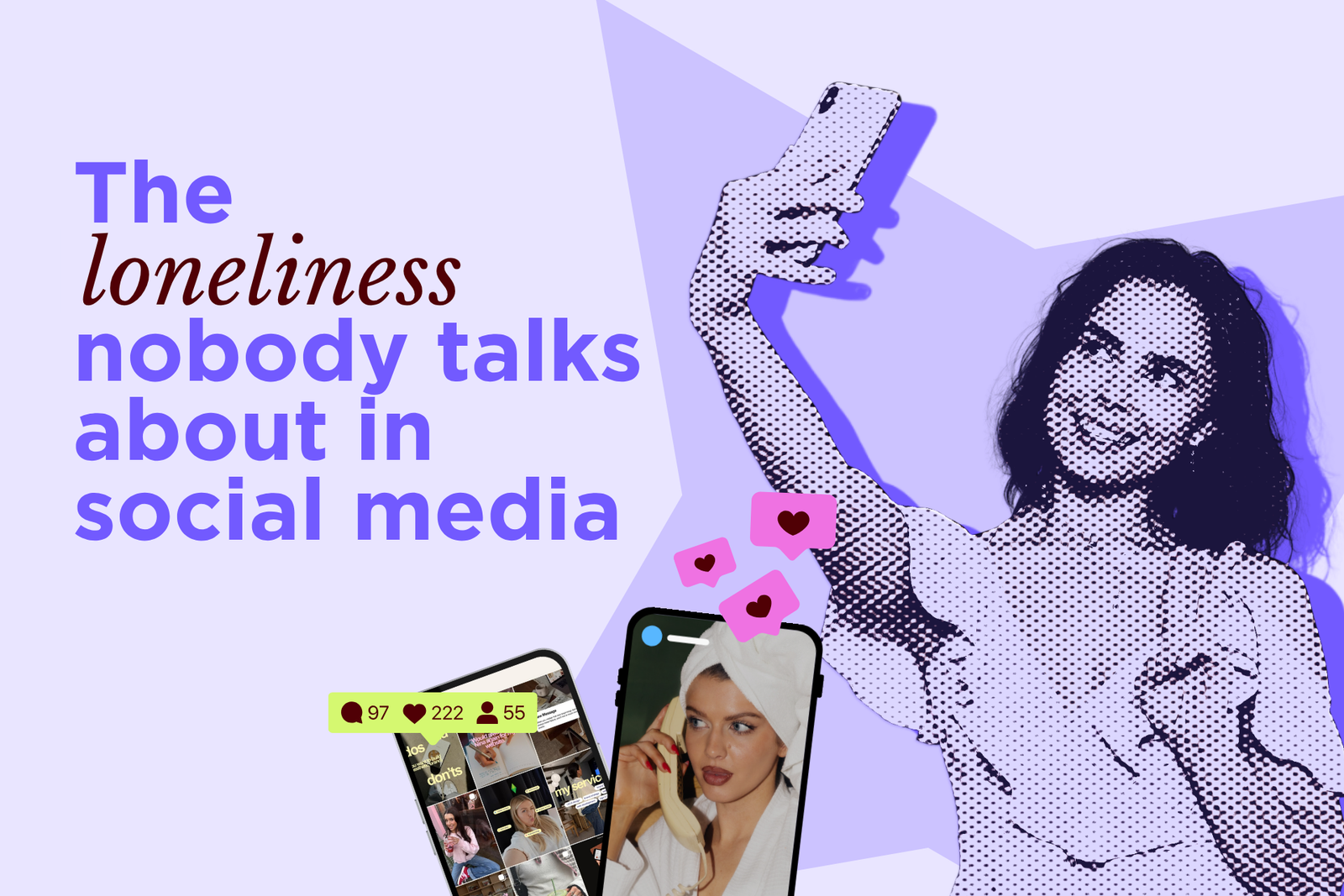
For a profession built around connection, social media can be surprisingly isolating. Not just because you're physically working alone (although many social media managers are), but because much of the work happens in a space that other people don't fully understand.
You're expected to understand internet culture, platform updates, audience behavior, content strategy, creative production, community management, reporting, customer service, and increasingly, AI. You're expected to know what worked yesterday, what might work tomorrow, and why engagement dropped despite no obvious change in performance.
Then, you’re expected to explain all of that to people who often just see social media as "posting on Instagram."
It's a strange position to occupy. You're constantly connected to people, conversations, and communities, yet many social media practitioners spend large parts of their careers feeling professionally alone.
The industry rarely talks about this. We talk about burnout, workload, algorithm changes, and content fatigue, but what we often brush over is isolation.
And for many social media professionals, it’s causing more damage than they realize.
Comparison isn't a side effect of the job. It's built into it.
Most professions don't require you to spend your entire day looking at other people's best work. Social media, on the other hand...
Whether you're managing content for clients, running brand channels, or building campaigns, staying informed requires constant observation. Monitoring competitors. Following creators. Analyzing trends. Saving examples. Reviewing campaigns and studying performance.
On paper, this sounds like research. In reality, it often means spending hours immersed in a curated stream of everyone else's highlights.
The agency owner sees another agency announce a major client win. The freelancer sees a creator with seemingly endless engagement. The in-house social manager sees another brand launching a campaign with ten times the budget and resources.
Most people understand comparison as something that happens occasionally. For social media professionals, comparison is often embedded into the work itself. The challenge isn't that practitioners are insecure or overly sensitive, but that the human brain wasn't designed to consume this much content, or evidence of other people's successes, every single day.
Even when you're doing great work, it's difficult not to wonder whether everyone else is doing it better.
Being chronically online comes with a special kind of exhaustion
There's another aspect of social media work that can be difficult to explain to people outside the industry. Exhaustion doesn't always come just from effort, but also from consumption.
Most jobs have a natural boundary between ‘being on’ and ‘switching off,’ whereas social media often blurs that line completely. The same platforms you're using professionally are also where news breaks, trends emerge, conversations happen, and culture evolves. The result is a role where being informed can feel intertwined with being online.
Over time, that creates a form of fatigue that doesn't always look like traditional burnout. You might not be working excessive hours or facing unrealistic deadlines, yet you still feel mentally depleted. That's because consuming content all day takes energy, too.
Every trend evaluated, comment section monitored, campaign analysed, or creator followed – individually, none of it feels particularly demanding. Collectively, though, it can leave you feeling stretched thin across hundreds of conversations, ideas, and signals.
This is one reason social media practitioners often describe feeling tired in a way that's difficult to articulate. They're not necessarily exhausted from creating content – they're exhausted from constantly consuming it.
One of the hardest parts of the job is feeling misunderstood
Many social media managers have experienced some version of this conversation. A post performs well, and everyone notices. A post underperforms, and suddenly everyone has an opinion. Either way, your work going unnoticed isn’t an option.
Social media is highly visible, which can create the illusion that it's simple. After all, everyone uses social platforms, but that doesn't mean everyone understands social media management.
People who would never critique an accountant's spreadsheets or question a developer's technical decisions suddenly feel comfortable weighing in on social strategy. While the people around them see only a caption and an image, the social manager knows that the post wasn't just a post. It was audience research, platform knowledge, creative judgment, community insight, reporting analysis, and brand strategy rolled into one neat little piece of content.
This disconnect can be surprisingly isolating. Not because colleagues are unsupportive, but because they don't always have the context needed to understand the role's complexity.
Agency-side practitioners often feel this acutely. They may be the only social specialist on a team, surrounded by talented marketers, strategists, designers, and account managers, yet still face challenges no one else is experiencing.
The same is true for many in-house marketers wearing multiple hats. They're responsible for social, but they're also managing events, email campaigns, partnerships, and reporting. Social becomes one of many responsibilities, making it difficult to find peers who truly understand the craft.
The irony is not lost on us how someone who spends their days managing communities can still end up feeling so professionally alone.
The impact shows up in the work
This isn't just a wellbeing conversation. It's a content conversation.
One of the ideas we return to often at Sked is that social media is the brand. For many businesses, social is where customers form impressions, build trust, and decide whether they want to engage. And the person managing that experience matters.
When social media practitioners are isolated, overwhelmed, or disconnected from others who understand their work, it inevitably affects the content they create.
Not because they're less talented, but because social media is fundamentally human. The best content doesn't come from content calendars or workflow diagrams. It comes from observation, judgment, creativity, and perspective: all things that are difficult to sustain in isolation.
When someone spends months or years carrying the pressures of the role alone, the effects often show up in subtle ways. Creative risks become harder to take, new ideas become harder to generate, confidence erodes, and decision-making becomes more cautious.
The content might still get published, but it becomes harder to produce work that feels genuinely alive. This is why conversations about practitioner wellbeing aren't separate from conversations about brand quality. They're actually directly linked – because the health of the brand is often influenced by the health of the person showing up every day to represent it.
Community doesn't solve the problem. But it can improve the experience.
In the midst of this conversation, it’s important to be realistic: Finding community doesn't eliminate deadlines, platform changes, difficult clients, or impossible stakeholder feedback.
The challenges of social media management don't just disappear because you join a Slack group, attend an event, or listen to a podcast. What does change, though, is the feeling that you're carrying those challenges alone.
The validation that comes from venting to someone who doesn't need a ten-minute explanation of why an algorithm change matters, or who understands the emotional whiplash of spending months on a campaign only to have performance judged by a single metric. The relief that comes from talking to someone who immediately understands your experience can be exactly what you need to get reenergized and stay motivated.
Community doesn't remove the tension, but it makes it easier to hold. The goal shouldn’t be to eliminate every difficult aspect of the profession, but instead to stop experiencing those difficulties in isolation.
The most underrated career move in social media
In our conversation with Angus Clark on the #Seen podcast, one point stood out: One of the most valuable things a social media professional can do is get into a room with other social media professionals – physical or digital – that get it.
Because for an industry built around audience growth, we often spend surprisingly little time investing in our own professional communities. We invest in content, tools, or training. But sometimes we overlook the value of finding people who genuinely understand the reality of our work.
Yet those relationships often become the source of the most practical support. They're where you find perspective when a campaign underperforms, where you learn how others are navigating similar challenges. Or where you discover that many of the frustrations you've quietly been carrying are shared by almost everyone else in the profession.
That realization alone can be powerful. It doesn’t solve the problem, but it can remind you that the problem isn't yours alone to solve.
Why #Seen exists
One of the reasons #Seen resonates with so many practitioners is because it starts from a simple acknowledgment.
This experience is real. The isolation is real. The comparison spiral is real. The feeling of being misunderstood is real. But none of it means you're doing the job wrong.
The social media industry spends a lot of time discussing platforms, tactics, and trends. And as much as those conversations matter, the people doing the work matter, too.
Behind every brand account is a person making hundreds of decisions each week. Someone balancing creative judgment with stakeholder expectations, navigating constant change while trying to create work they're proud of.
Because while social media may be where brands build connection and community, the people behind those brands need connection and community just as much.
You're invited to join the conversation…
If any part of this feels familiar, you're not alone. Subscribe to #Seen, the newsletter and podcast for social media practitioners who want to be in the room with people who get it.