On this page
A founder lands their first big media opportunity and asks the question every PR team has heard: How quickly can we get press coverage?
It's understandable. When you have a story, a launch, or a new product to promote, you want to see it in the headlines. But if your PR strategy starts and ends with the first press release, you might be measuring the wrong thing.
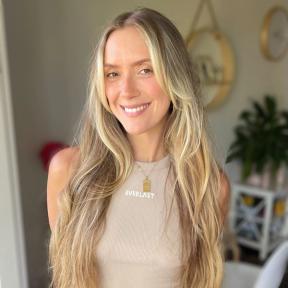
For Elle Kress, Founder of Hey Good News PR, effective PR is less about chasing one big hit and more about building something that keeps working after it lands.
Her rule? Give it six months.
The idea is simple: use the first major piece of coverage as a launching pad, then keep building from there. That means clarifying your founder story, preparing for media opportunities early, and connecting PR with paid, earned, and social so each channel has more to work with.
Because the goal isn't securing one article, it's building a platform people can keep finding you through once whatever new, shiny thing you’re promoting fades from the feed.
Why a press release is a launching pad, not a finish line
Where a press release can create a moment, a PR strategy creates momentum.
That distinction matters, especially for startups and growing brands. It's tempting to judge a PR retainer by whether the first campaign produces a headline. But one piece of coverage rarely changes how a brand is perceived overnight.
The more valuable opportunity comes next.
"The best PR happens when you focus six months on it. You get a big media release out, get great coverage, and then use that as a launching pad for ongoing media," says Elle.
The first story gives journalists a reason to pay attention, and also gives your team something to build on. That coverage can become proof points for future pitches, fuel for your social channels, material for your website, and context for the next story you want to tell.
This is where PR starts to compound. Instead of treating every media opportunity as a fresh campaign, you build a narrative that becomes more credible and recognizable over time.
One founder interview can lead to another; one product story can open the door to a broader conversation about your category; and one strong piece of coverage can give the media a reason to remember you the next time your brand lands on their desk.
That's why PR retainer length matters. If you're only giving it a few weeks to prove itself, you're measuring the launch, not the PR strategy.
The real question isn't "How quickly can we get coverage?" It's "What can we build from the coverage once we have it?"
Start with a single-page founder story
Before you pitch the media, you first need to know what you're pitching.
That sounds obvious, but founder stories tend to sprawl. There's the original idea, the problem you noticed, the first version of the product, the pivot, the funding, the customer story, the big vision...
A journalist doesn't need your entire brand history; they need to understand why this story matters. That's why Elle starts her work with a structured founder brainstorm.
"I will meet every single founder I work with and have a brainstorming session over how they founded their story, what's their motivation, what's the story to date," she explains.
The aim is to distill all that information into a single A4 page. Think of it as your founder story cheat sheet, not a polished brand manifesto or a 40-slide pitch deck, but a practical reference your PR strategy can keep coming back to.
Start by working through questions like:
- Why did you start the business?
- What did you see that other people weren't seeing?
- What problem are you trying to solve?
- What has happened since you started?
- What makes the story relevant now?
- What do you want people to understand about the brand?
Then look for the thread connecting the answers. That thread is often more useful than the polished version of your story, as it gives your PR team a clear foundation for finding angles, pitching journalists, and preparing you for interviews without reinventing the narrative every time.
It also makes your story easier to remember. Journalists are busy, and so are founders. If you need to scroll through a deck every time someone asks, "What's the story behind the business?", your messaging probably needs simplifying.
One page forces clarity, a characteristic useful far beyond PR. The same story can shape your website, social content, founder LinkedIn presence, brand campaigns, and, most importantly, future pitches.
Remember, AI can support this process, but it shouldn't replace your own judgment. As Elle puts it: "AI has absolutely transformed how we work. But I never use it as a source of truth."
Media-train before you need to
Getting media coverage is one thing, but getting interviewed is another.
Founder media training is often treated as something you do when a major opportunity comes along. But by then, it’s probably too late.
Elle takes a different approach: "I'll always run a media training session in the first quarter of working with a scale-up," says Elle Kress, Founder of Hey Good News PR.
The point isn't to turn every founder into a polished spokesperson. It's to make sure they can communicate clearly when the pressure is on.
A useful media training session allows you to practice and find your words before the stakes rise. Ideally, set aside a half-day to role-play the difficult interview, have someone push back on your claims, and fire off the uncomfortable questions you hope a journalist won't ask.
Next, work out what you actually want to say. This is especially useful for founder-led brands because your personal perspective is often part of the story. You need to explain the business naturally without falling into rehearsed talking points or getting pulled into a conversation you weren't prepared for.
Media training can also reveal gaps in your messaging. Maybe your answer to "Why now?" isn't strong enough, or your explanation of the problem is too technical. Perhaps you have a great origin story, but haven't yet worked out how it connects to the bigger cultural conversation.
Better to discover that in a practice interview than in a live one, and once you've got those answers down, they can become a part of your wider founder-led PR strategy.
The practical move: build the system before you need the story
If your PR strategy currently starts with "We need a press release," zoom out. Start by stabilizing the foundation:
- Get your founder story onto one page. Spend an hour working through the origin, motivation, problem, progress, and reason the story matters now. Keep editing until someone unfamiliar with the business can understand it quickly.
- Book media training early. Don't wait until the first major interview lands. Use a half-day practice session to pressure-test your messaging while there's still time to refine it.
- Think in six-month windows. A six-month PR retainer gives you room to launch a story, follow up on the coverage, develop new angles, build journalist relationships, and learn what actually gets traction.
Then, once you have the coverage, capitalize on it across your channels.
A media hit shouldn't disappear into your website’s press page. Turn the interview into social content, pull out a founder insight for LinkedIn, use a strong statistic in your next campaign, and reference the coverage when pitching the next story.
This is where PR and social stop operating as separate functions. Earned media can give social content credibility, social can extend the life of earned media, and paid can put the story in front of a relevant audience after the initial buzz fades. Your channels don't need separate strategies: they need a shared narrative.
When measuring PR success, look beyond the first headline. Are you building a stronger media profile? Are journalists coming back to you? Is your founder becoming associated with a particular conversation? Is your coverage giving your social and brand content more to work with? Those are stronger signals that the platform is growing.
Build the platform, not the press release
A press release is an asset, but it isn't the strategy.
The brands that get lasting value from PR understand that the first story is only one part of the book. The real opportunity comes with creating enough clarity, consistency, and momentum that each piece of coverage makes the next one easier to earn.
And that starts with a founder story you can explain in a single page. It gets stronger when your team is ready to handle the interview before it arrives, and compounds when PR, social, paid media, and brand strategy work together to support the same narrative.
Build the platform, not the press release.
Want to hear Elle Kress unpack the six-month PR rule in more detail? Listen to the full conversation on #seen, or explore more conversations from the #seen community.