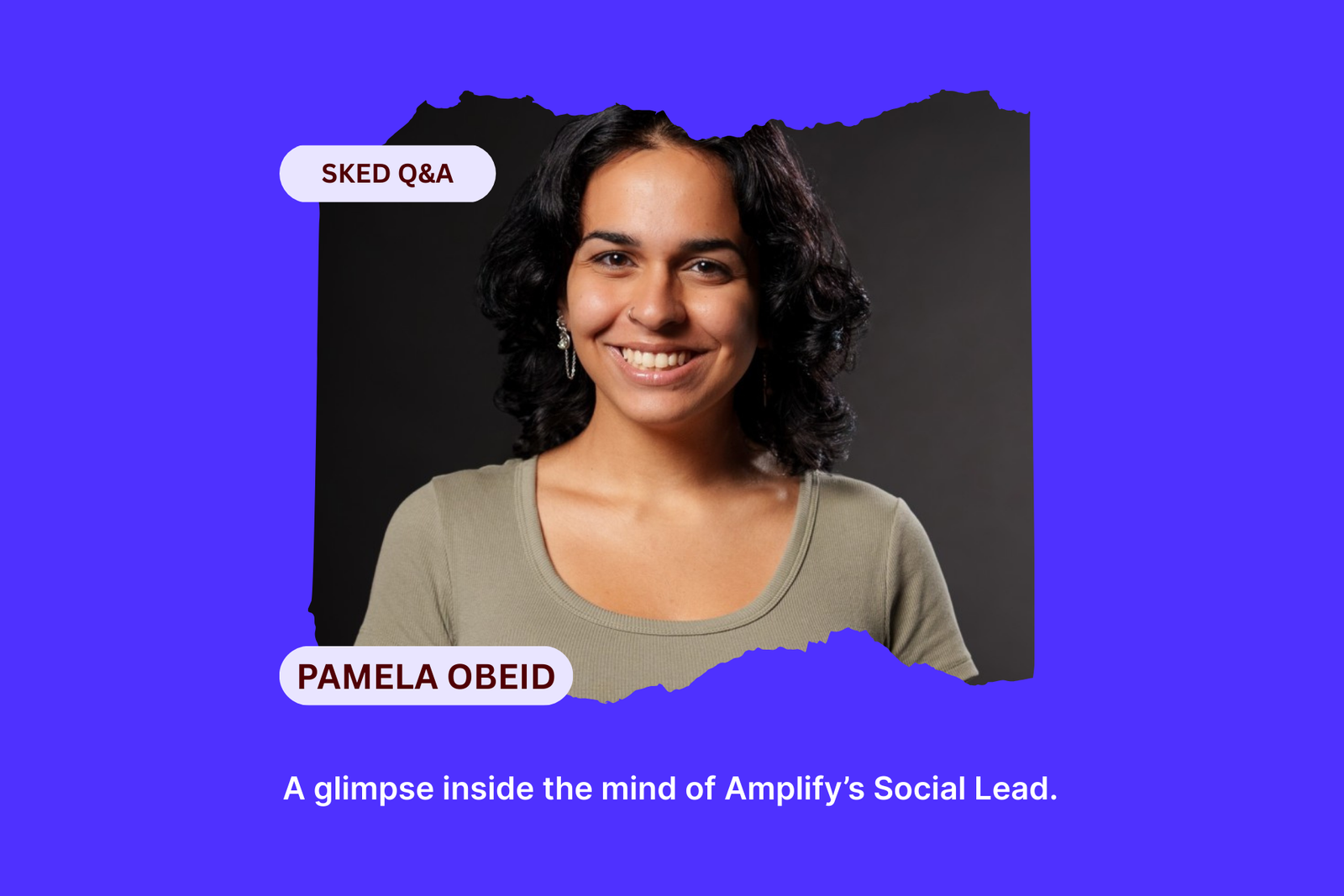
Pamela Obeid doesn’t believe in “pretty for pretty’s sake.”
As a Social Lead, she’s doubled down on something far less flashy — consistency. Not just posting regularly, but building accounts that feel unified, recognisable, and intentional. The kind where someone stops you at an event and says, “Oh, I know that account.”
From championing junior voices in the room to caring more about comments than reach, Pamela’s philosophy is simple: good social should feel native, valuable, and never like an ad screaming for attention. And if someone takes the time to leave a comment — even a spicy one — you’ve done something right.
1. What’s one social strategy you’ve doubled down on this year that’s actually moved the needle?
Consistency is key. Whether it's as small as consistent stylisation on post captions, or as big as series-based content spanning over months, a social account needs to feel synonymous, not like seven different people are posting on the one account.
Metrics aside, the key to a solid social strategy comes from recognition. It's not numbers on a screen, it's that person you meet at an event that says "Hey, I know that account! You guys do X, Y, or Z so well!"
The best way to build brand recognition through social and continue moving the needle is by a consistent, unified approach. Getting internal teams and external stakeholders aligned on how the brand should look and feel is the first building block to craft an effective social strategy that really thrives.
2. What’s a mistake you see brands making on socials right now that’s quietly killing reach or engagement?
When a brand doesn't listen to people on the team that are native users of the social platforms, day in and day out.
It's so blaringly obvious when a brand's socials have been totally railroaded by higher-ups that lack understanding of how the respective platform works. It can be as small as poorly worded captions that come across as dated rather than in touch, but those are the mistakes that add up over time.
When content is being executed with a lack of understanding of how the platforms function, there's an inevitable decline. Those younger interns and Social Execs working on accounts? They're the ones that consume media on the very platforms they're creating content for. Their POV is golden, and their opinions deserve to be heard, or at the very least, given a fair go.
3. What’s the metric you care about most and why?
Comments. Arguably the hardest metric to see skyrocket.
Reach is great and all, but ultimately, the easiest metric to look impressive. Having your post reach a wide audience is fairly easy considering the way algorithms function today. Comments, on the other hand, require a real investment in your content. If a user is taking the time to comment on a post, they've truly resonated, and that's exactly how you know you're doing it right.
For the record, this counts for hate comments, too. If you've struck enough of a nerve that someone's taking precious time out of their day to leave some choice words, you've won.
4. What’s the best piece of advice you’ve ever been given about content or creativity?
Good content doesn't feel like an ad. Whilst I've essentially worked in and amongst brands for the majority of my career, the assets of mine that have seen the most success are the ones that natively align with their platform, with brand messaging seeded subtly through.
People don't want to feel like they're being advertised to. They're being advertised on their commute to work, during their podcasts, and when they're unwinding with a show before bed. The last thing they want is to pop on their phone for a scroll break and be hit by large, jarring logos and convoluted, poorly-worded brand messaging.
The best pieces of content? Something of value. It can be comedic, educational, or emotional, but as long as it's good content, it will perform. Where content tends to drop off is when incessant branding takes over, and all of a sudden, people are consuming advertisements instead. And, in the words of the smash Netflix hit, nobody wants this.
5. What’s the worst advice you followed for way too long?
This isn't a piece of bad advice per se, but I definitely spent a lot of time in the past taking the words of my superiors as gospel.
There were so many times where I knew the call that was being made was the wrong one, but I didn't feel empowered enough (or let's be real, experienced enough), to really push that. Even when I would later be proven right, which happened nine times out of ten, it wasn't even slightly satisfying - it was too late at that point.
I guess in that vein, the worst advice I followed for way too long was that those superior to you are always right. Whilst it's always worth hearing them out as a first priority and taking into account their extensive experience and wealth of knowledge, you could sometimes be right, too.
Nowadays, I always encourage my own team to challenge me if they ever see fit. I don't always make the right call, either.
6. What book, album, podcast, or creator has quietly shaped how you think about your work?
I've looked up to Shit You Should Care About for a long time. Luce has such a unique way of approaching news, current events, and all the pop culture happenings, and her content (particularly on social) has captured the nuances of younger people seemingly effortlessly.
When the company does partner with brands, it's always done in a way that feels native to both the platform and the SYSCA account, meaning that said branded posts almost always have engagement (and by engagement, I definitely mean comments) that's on par with non-branded posts. That, to me, is a giant metric of success, and social media done right.
7. What’s a habit or rule in your workflow that keeps you sane and consistent?
The lists. Gosh, the lists.
I'm yet to master the art of keeping an organised list, so I flip flop between handwritten to-do's, using the Notes app, or even sending myself messages on Slack. Working in social means that you can have five finnicky tasks pop up in the span of 20 minutes, and if I don't note them down somewhere, I'll feel my brain starting to combust as I strain to locate even a semblance of a thought.
Speaking of lists, I always carve out the first 10 minutes of my day to check my calendar, skim my emails, and make Some Form Of List to kick things off. If I don't do this, the combustion starts to come on even quicker.
8. If you had to explain your content strategy to a non-marketer in one sentence, what would you say?
This is dedicated to my best friend who still, to this day, does not understand what I do.
My content strategy thrives on understanding each brand with work with, and in turn, understanding which content will perform. It could be a silly lil TikTok trend, a series of static infographics, or a miniseries with top tier talent. Understanding that there isn't a one-size-fits-all approach is the cornerstone of my work, and bleeds into all I do.
9. What’s something about working in socials that doesn’t get talked about enough?
When we say Always On, we really mean it.
If there's one thing the social world is, it's fickle. Some of the hottest trends today could be completely off the radar next week.
Concepting and producing aside, there's a need to constantly stay up to date, through your own feeds, anecdotal conversations, or even the odd news scroll every now and again. In that sense, it really can feel like a 24/7 gig sometimes.
I'm constantly seeing content pop up and thinking about how it could apply to a certain client – and in all honesty, that's the sort of approach that makes people guns at what they do.