We’ve seen this movie before — and the ending doesn’t change.
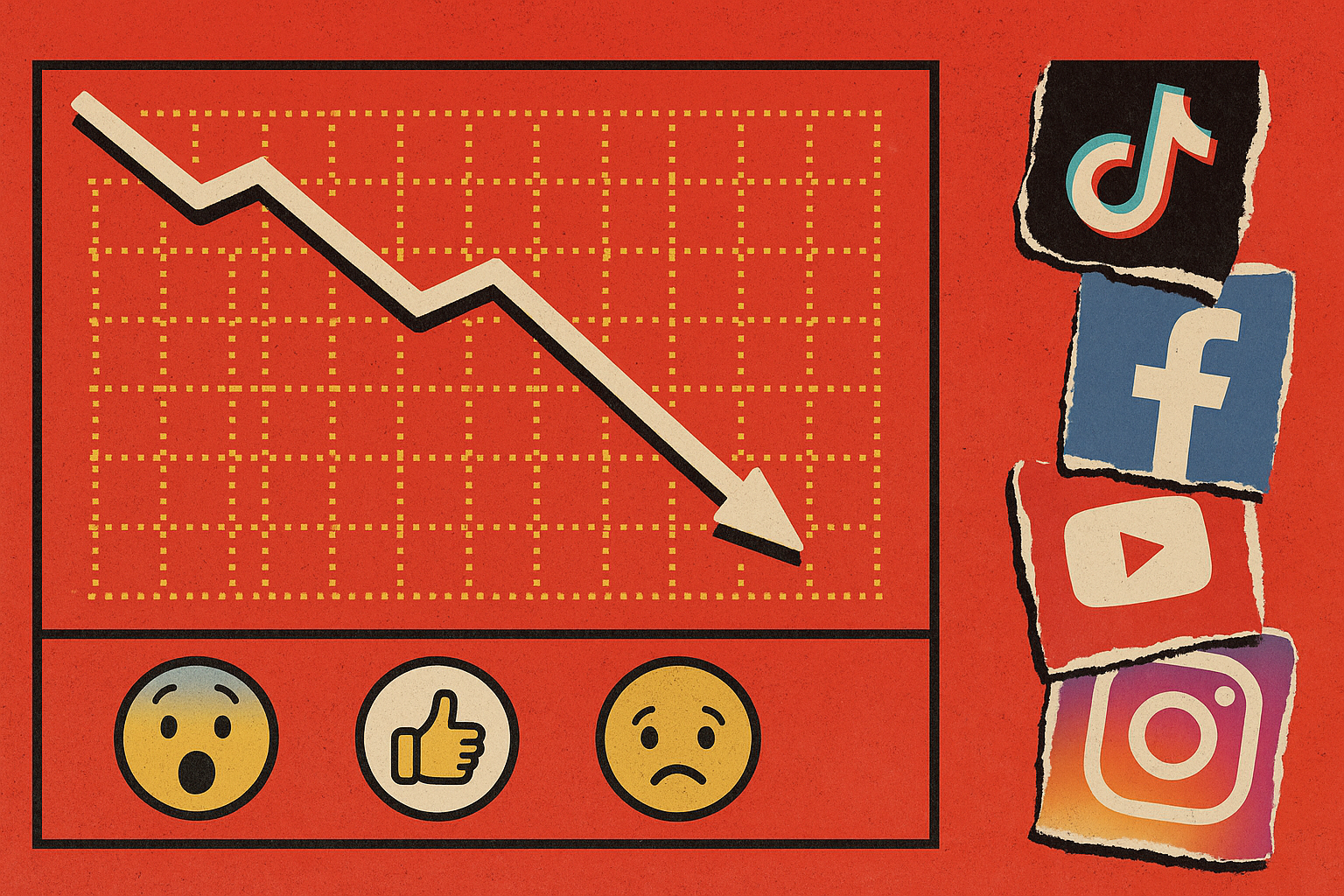
Every couple of years, marketers panic about one thing: organic reach is dead.
And every couple of years, they’re half-right. Platforms throttle distribution, brand posts tank, dashboards go red. But here’s the thing: this isn’t a glitch. It’s the business model.
Here’s why organic reach keeps dropping — and how the smartest brands are staying ahead.
1. Platforms don’t owe you reach
Social feeds aren’t public utilities. They’re ad machines. Platforms give you just enough organic love to keep you hooked, then shrink it so you’ll pay to play.
Facebook did it first. Instagram followed. TikTok is already there. The cycle is predictable: launch with huge organic growth → hook creators → limit distribution → monetise with ads.
2. Content saturation is at peak levels
There’s more content than attention. Every second, TikTok, LinkedIn, Instagram are flooded with posts. The bar isn’t “good content” anymore — it’s outstanding content.
Audiences are numb to recycled templates. The scroll is ruthless. Only content that sparks emotion — funny, raw, useful, bold — survives.
3. Algorithms reward engagement, not publishing
Posting daily doesn’t guarantee visibility. Platforms reward signals — comments, saves, shares. If you’re not driving interaction, you’re invisible.
Consistency still matters, but without conversation it’s just noise. A smaller cadence of high-value posts will outrun daily filler.
Join social media managers, marketers, creators and in-house teams sharing what works right now: practical advice, honest conversations, and direct access to some of the smartest people in social.
Join the community4. Audiences have shifted from feed to DM
People are moving from public feeds to private spaces: Slack groups, Discords, DMs. Engagement is still happening — just not in your reach metrics.
The rise of “dark social” means your best content might circulate in screenshots or group chats you’ll never see.
5. Paid + organic need to work together
The old game was “organic first, ads later.” Now? Paid media is fuel to kickstart organic momentum. Smart brands treat them as one flywheel, not separate channels.
Organic validates ideas. Paid scales them. Together, they drive growth.
How smart brands are adapting
- Leaning into community: Instead of chasing impressions, they’re building groups, forums, and Slack/Discord spaces where engagement is guaranteed.
- Creating episodic content: Turning campaigns into series so people come back for more, instead of one-off splashes.
- Investing in creators & UGC: Trust > polish. UGC cuts through algorithm clutter because it feels real.
- Optimising for social search: Treating TikTok, LinkedIn, and YouTube like search engines — not just feeds.
- Prioritising depth over breadth: Fewer posts, more intention. Less “posting to fill the calendar,” more content designed to spark conversation.
The takeaway: Organic reach will always tank. It’s how platforms print money.
The winners are the brands that stop fighting the algorithm — and start adapting to where attention actually lives.

.png)