On this page
- What to put in an Instagram business bio
- 1. Profile picture
- 2. Instagram story highlights
- Highlight what your account is about
- 3. Link stickers in Instagram Stories (formerly swipe-up links)
- 4. Write a killer bio
- Describe your business
- Instagram business bio examples by business type
- 5. Tagline
- 6. Highlight your company's personality
- 7. Adding @ to link to multiple accounts in the bio
- 8. Mention your branded hashtag
- 9. Adding web links with Sked Link
- 10. Contact options
- 11. Be an official Instagram account
- 12. Use the right category
- 13. Use headline keywords
- Building bios that convert, on every account you manage
- Creating an optimized Instagram business bio
Your Instagram business bio gets a profile photo, a name field, 150 characters, a few links, and a handful of buttons to tell people who you are and what to do next. If you run Instagram for a brand, a group of locations, or a roster of clients, it's also the one piece of copy you rebuild for every account.
This guide breaks a business bio into 13 parts, with examples from well-known brands, bio templates by business type, and a simple process for keeping every bio you manage up to date.
What to put in an Instagram business bio
Here's the short version. Each part has its own section below.
- Profile picture: your logo or brand mark, readable at small sizes.
- Story Highlights: saved Stories that explain what you do.
- Link stickers: tappable links in Stories and Highlights.
- Bio text: what you sell and who it's for, in 150 characters.
- Tagline: your motto, if people already know it.
- Personality: a tone that sounds like your brand.
- @ mentions: links to your sub-brand or location accounts.
- Branded hashtag: a tag customers can use and follow.
- Web links: up to five links, or one link-in-bio page.
- Contact options: email, call, and directions buttons.
- "Official" label: if imitation accounts are a problem.
- Category: the label under your name.
- Name field keywords: searchable words beside your brand name.
The screenshots below show each brand's profile when this guide was first written. Bios change, but the structure behind them still holds.
1. Profile picture
Most businesses on Instagram use their logo as their profile picture.
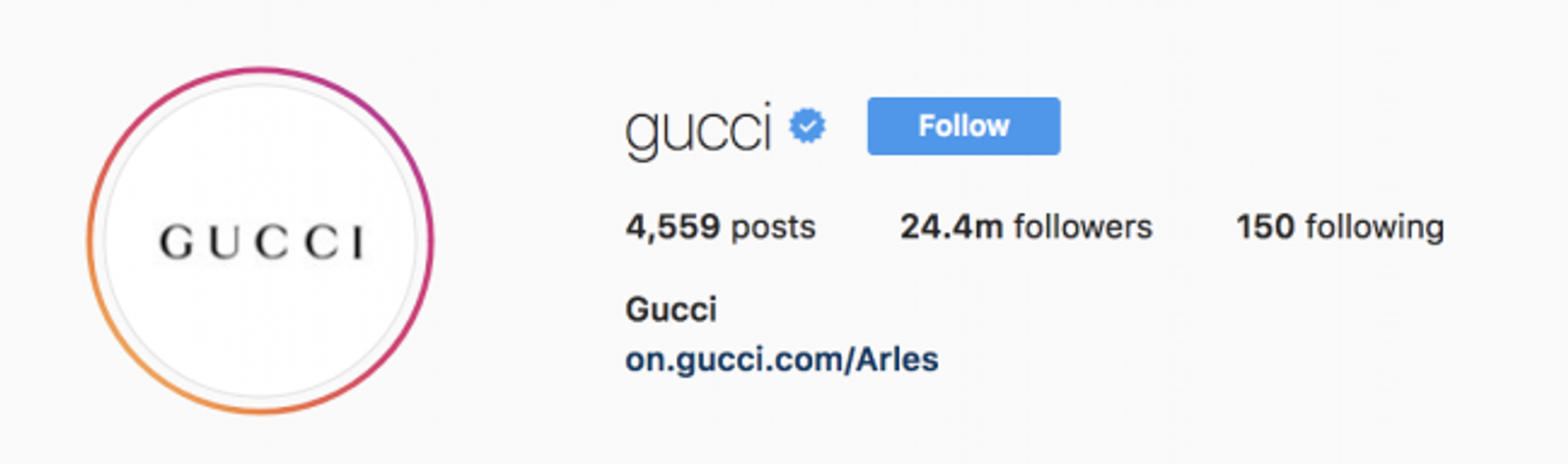
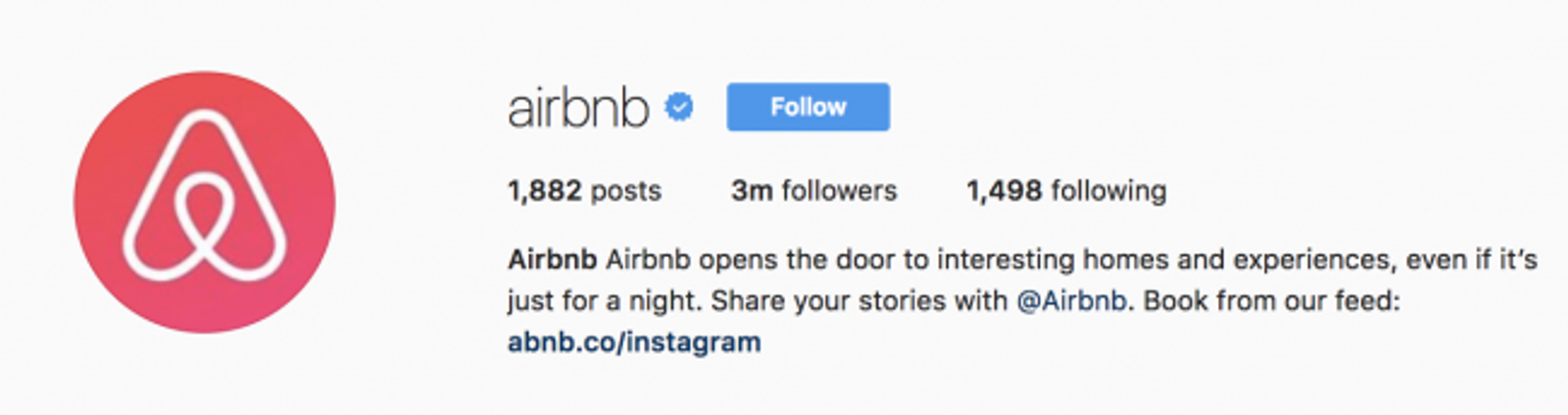
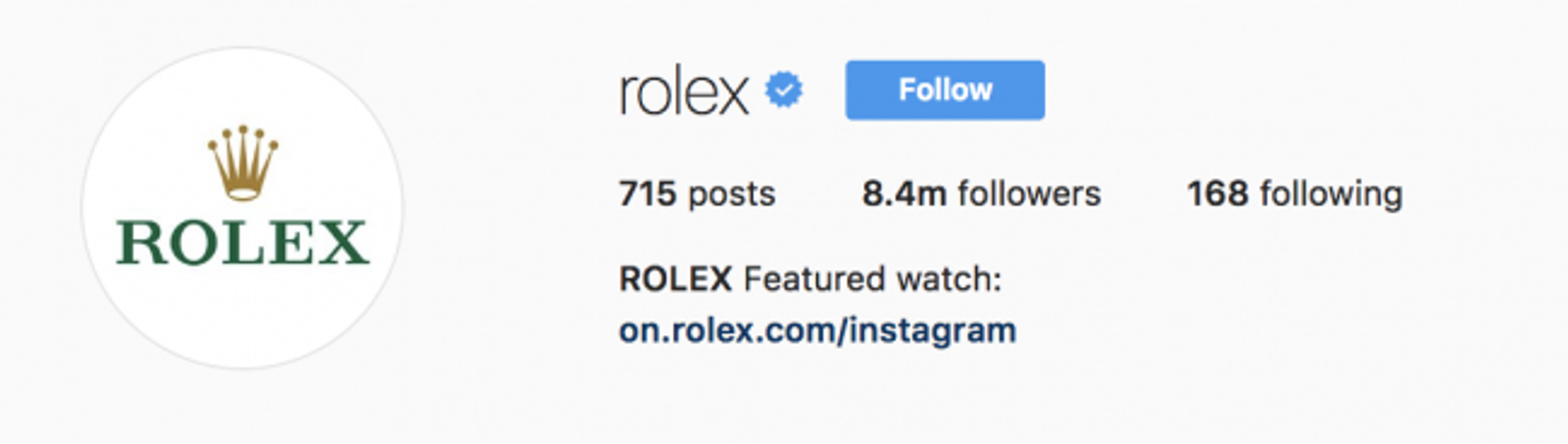
A logo works best when it (or your brand mark, the image part, like Airbnb's) is instantly linked to your brand. People who know you from your newsletter, website, or other social channels can then spot your official account at a glance.
If your profile picture includes text, make sure it's readable at a small size. Most people see it as a tiny circle in their feed and in search results.
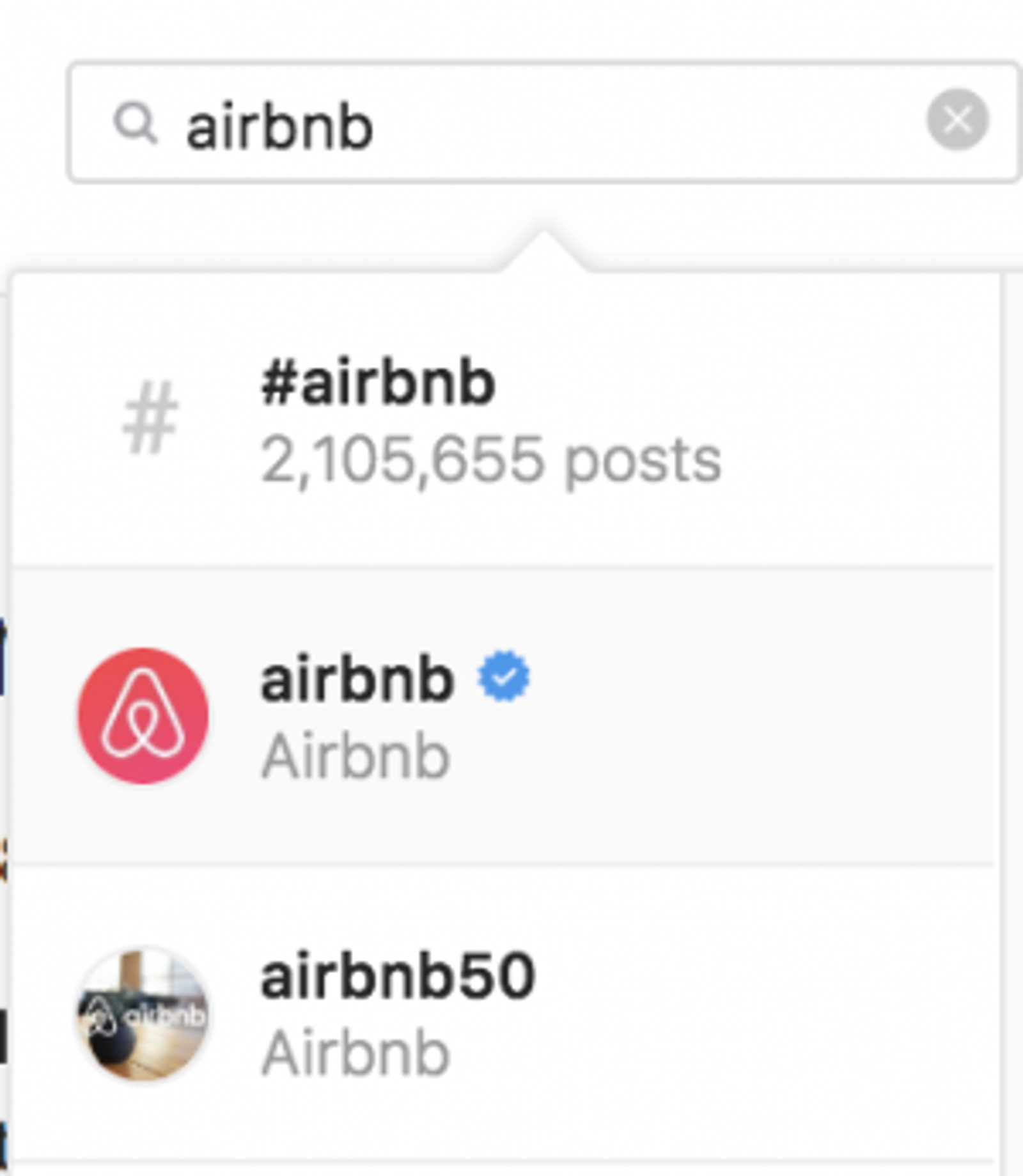
That matters most in search. Compare the top two results here: both use the logo, but the main Airbnb account is far more recognizable and visually distinct.
If you manage several accounts for one brand, such as regions, locations, or sub-brands, use the same mark on each and change only a small detail, like a location name or a color band. For upload sizes, see our Instagram image and video size guide.
2. Instagram story highlights
Instagram Stories disappear after 24 hours. That was a problem for businesses whose Stories were central to a campaign, a launch, or an event that ran longer than a day.
Instagram fixed it in December 2017 with Story Highlights, which let you pin a selection of Stories to your profile, just below your bio.
For example, Uber has used Highlights for company news, product features, events, and promotions.
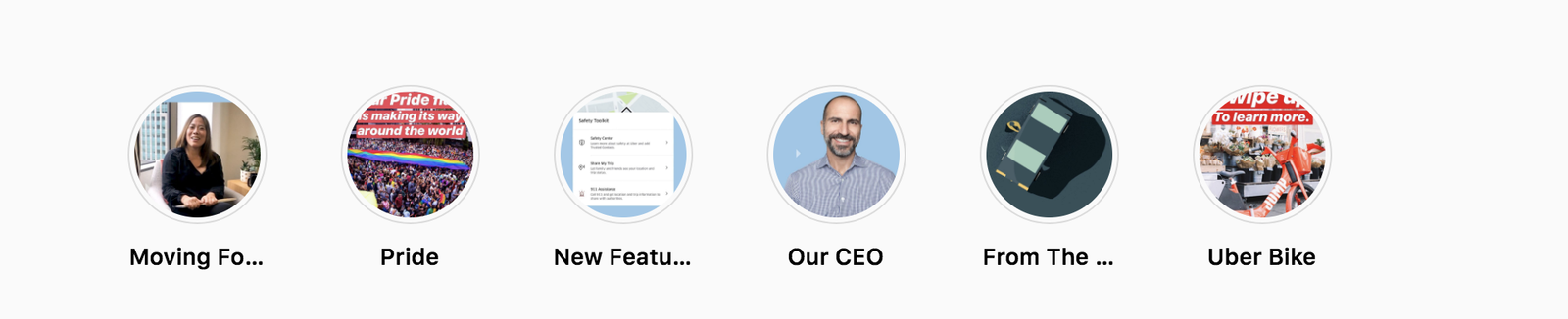
Highlights stay on your profile until you remove them.
Here's how Sked Social has used Highlights on our Instagram profile, @getskedsocial:
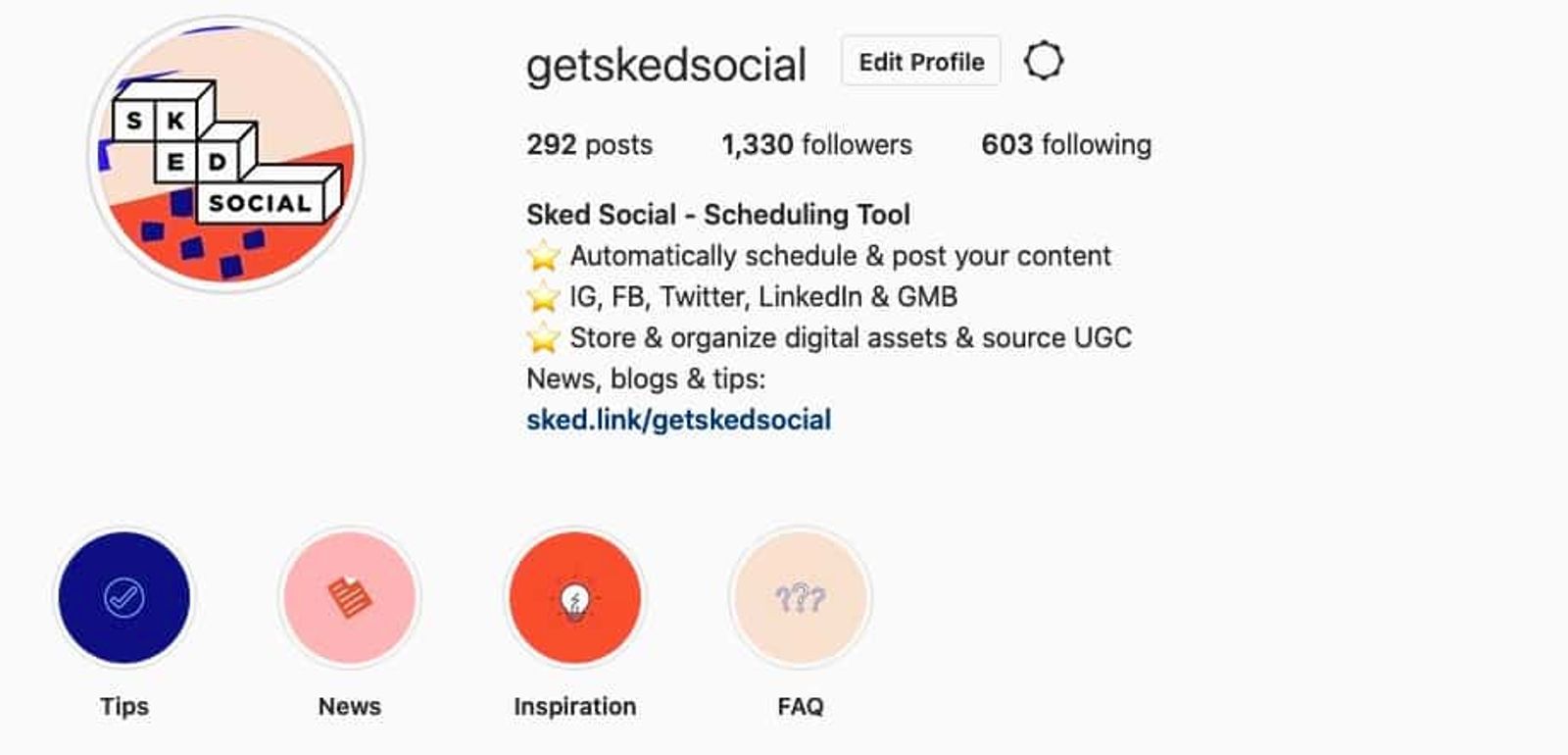
We grouped them into the four topics we posted about in Stories at the time: tips, news, inspiration, and FAQs.
Highlight what your account is about
Highlights take you past the 150-character limit of your bio. A short tagline can only say so much, but a row of Highlights shows visitors what they'll get if they follow:
- Do you post how-to videos?
- Is there a giveaway or promo running?
- Is there a campaign people can join?
Potential followers can see what makes your account different from similar ones just by tapping through your Highlights.
Here are two brands that have used Highlights well:
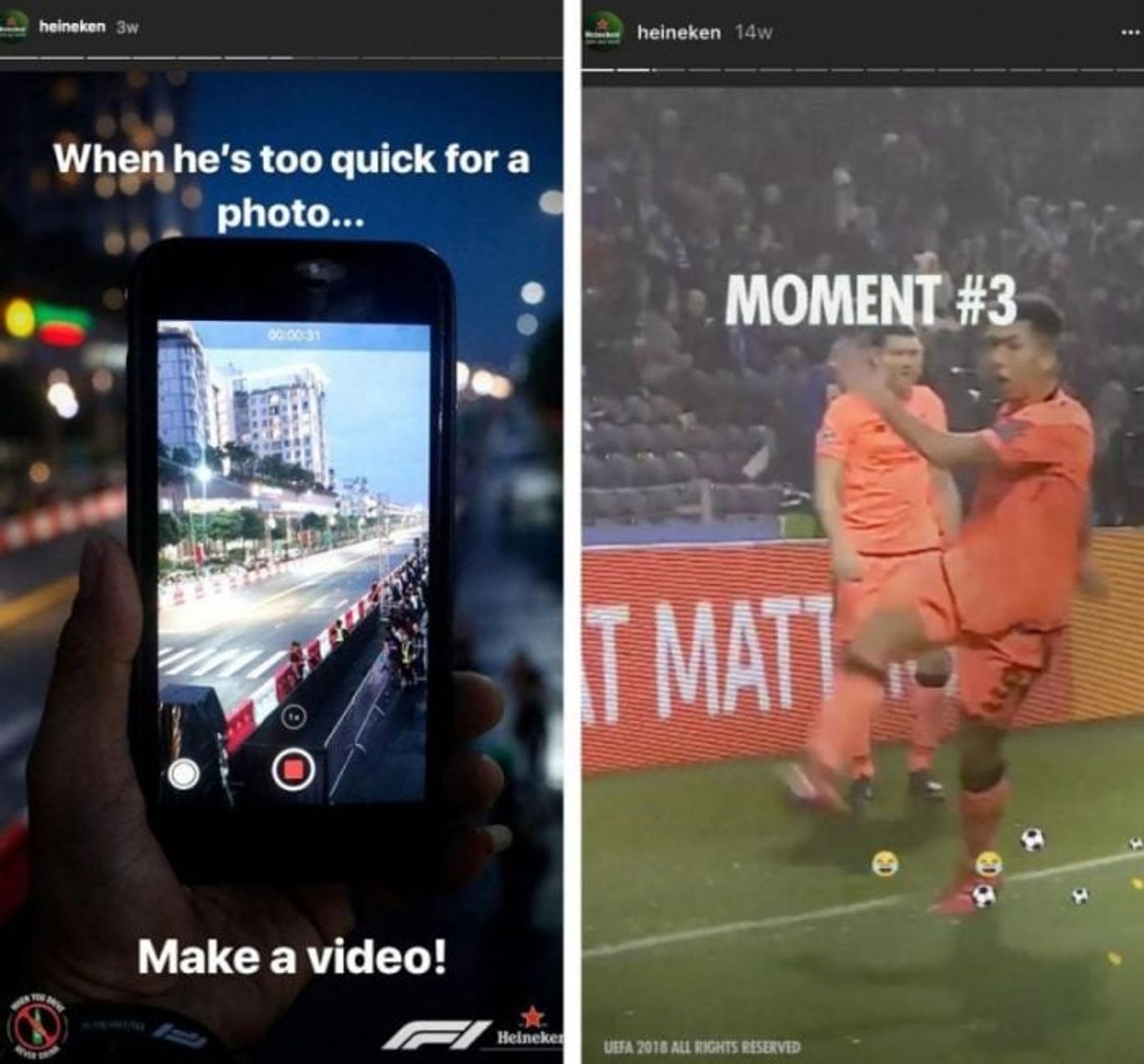
Heineken
Heineken sponsors sports events around the world, from football to motor racing, so its Highlights have featured events such as the UEFA Champions League final and Grand Prix races.
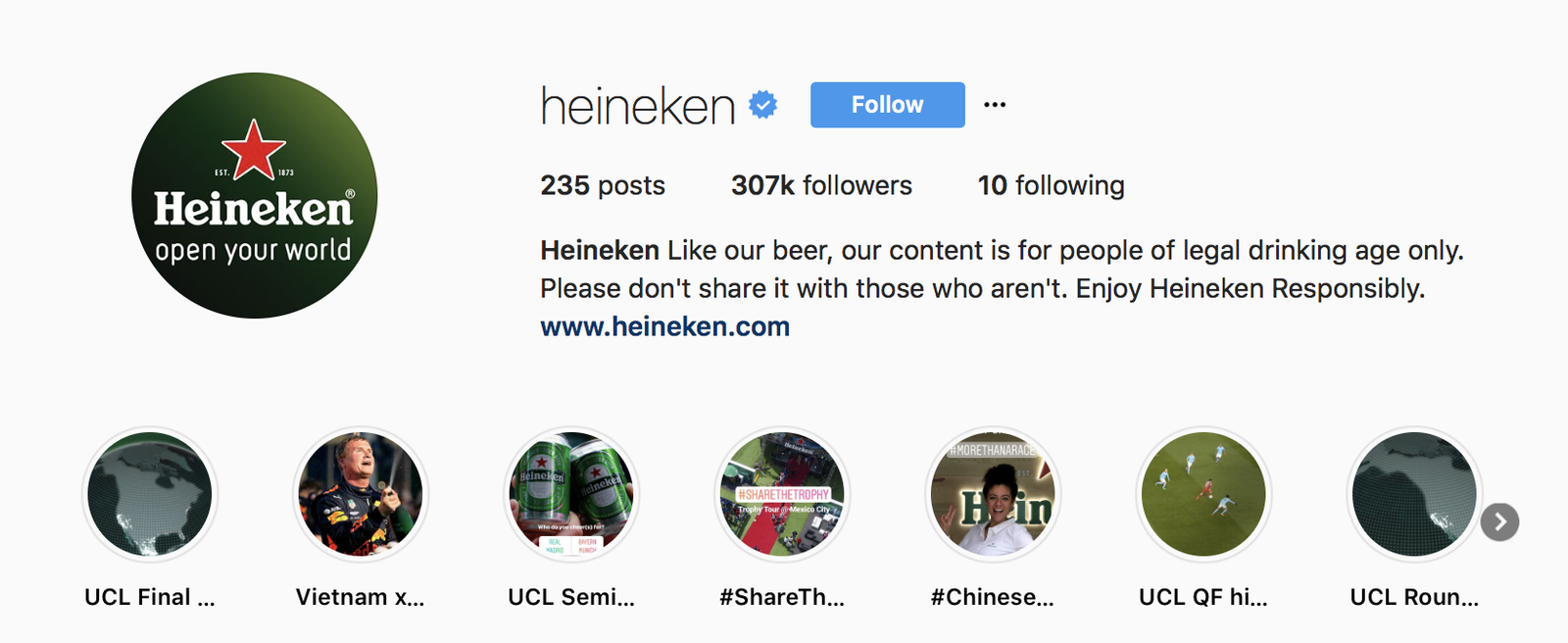
Most of them featured the most shared moments of each event, in line with the brand's #ShareTheDrama campaign at the time.
HubSpot
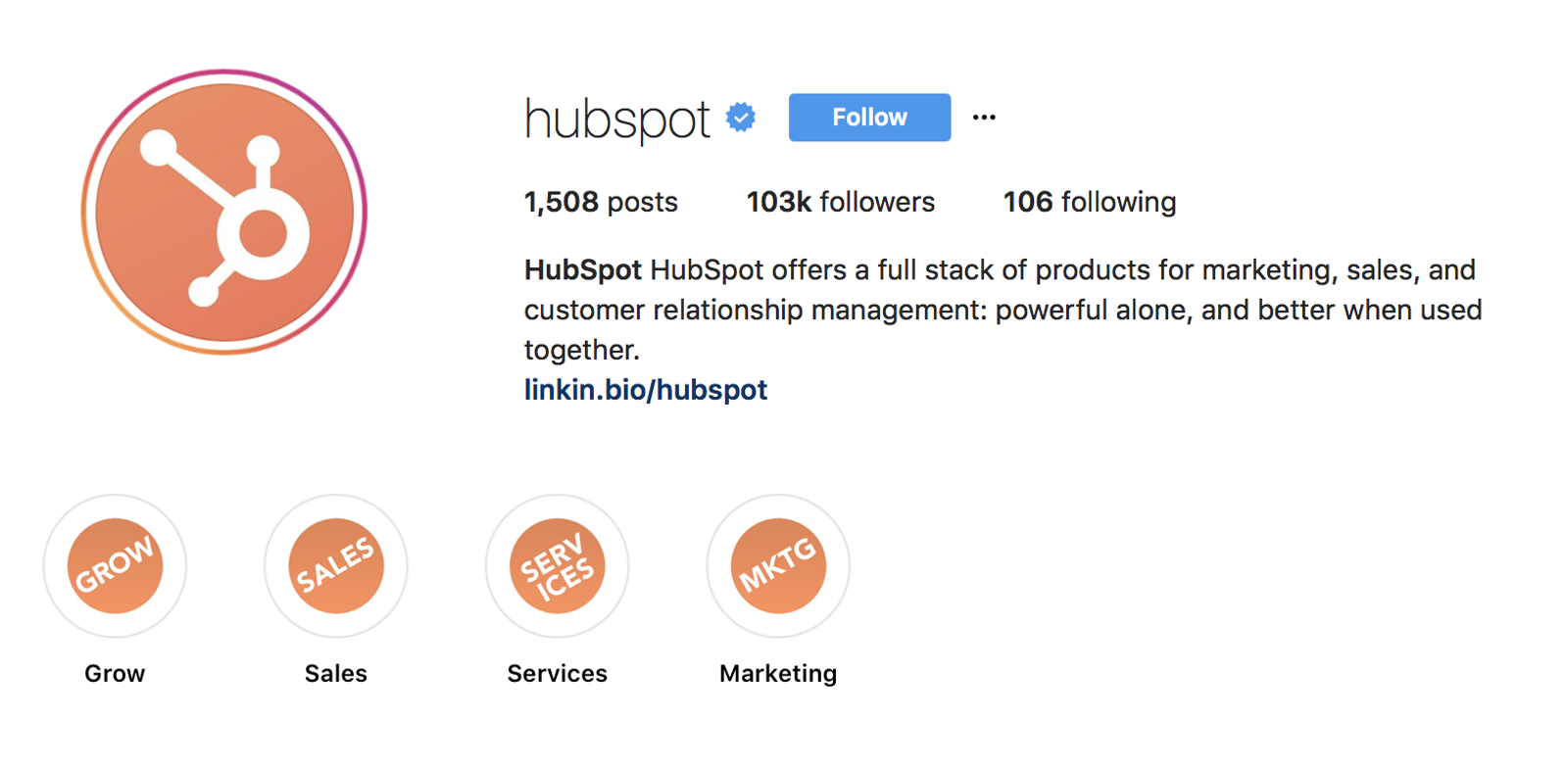
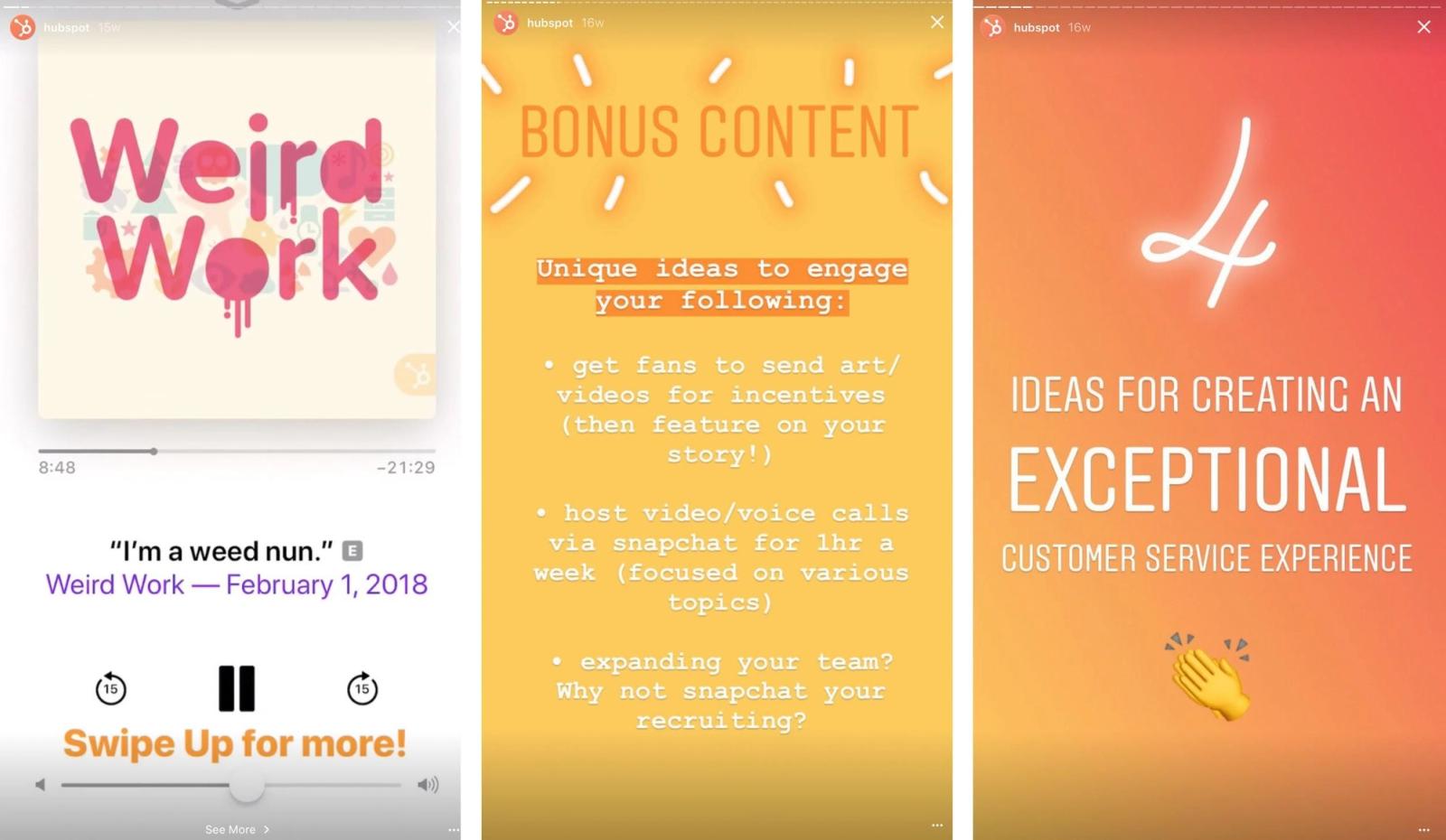
HubSpot, the marketing and sales platform, has organized its Highlights by topic: marketing, growth, sales, and service. Each one holds content for B2B marketers, such as email phrases to stop using, social media tips, and customer service advice.
That's a whole business summed up in a row of circles.
Need ideas for what to post? Check out our Instagram Story ideas for business.
3. Link stickers in Instagram Stories (formerly swipe-up links)
Highlights are also a way around the single link that bios used to have. Instagram replaced swipe-up links with the link sticker in August 2021 and opened it to all accounts that October. The old 10,000-follower rule is gone. Instagram said new accounts and accounts that repeatedly break its Community Guidelines can't use the sticker.
Add a link sticker to a Story, save that Story to a Highlight, and the link stays on your profile after the 24 hours are up. That gives you a permanent, tappable route to a product page, a booking form, or a campaign landing page.
For ideas on what to link to, read our guide to using link stickers to drive sales. If your team plans Stories at a desk, here's how to create and post Instagram Stories from a laptop.
4. Write a killer bio
How do you write a great Instagram bio? Here's what to consider.
Describe your business
Your bio should explain what your brand is about in 150 characters or less. Think of it as your elevator pitch. What does your business sell? Why does it matter? What can customers expect? The answers should all be in your bio.
One way to start is to list the main keywords people associate with your brand. If you sell shoes, your keywords might be "sneakers" and "running shoes." Then sum up your business in one or two short lines that use them.
Here are two Instagram business bios worth learning from:
SpaceX
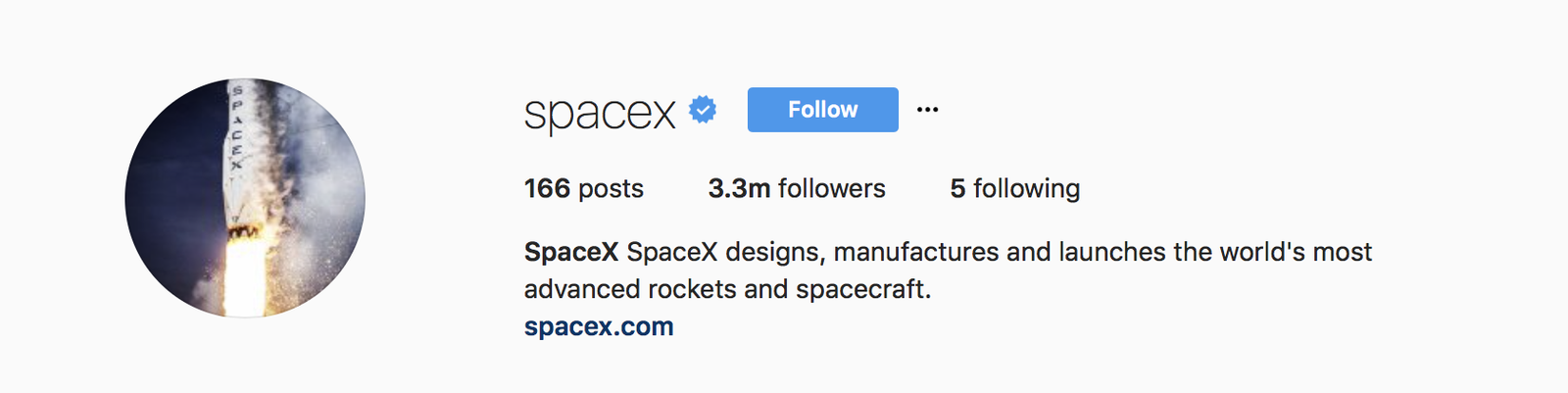
SpaceX's bio positioned the company as the "designer" and "manufacturer" of the "world's most advanced rockets and spacecraft." It's a big claim, stated plainly, and it signals ambition and innovation in a single line.
GoPro
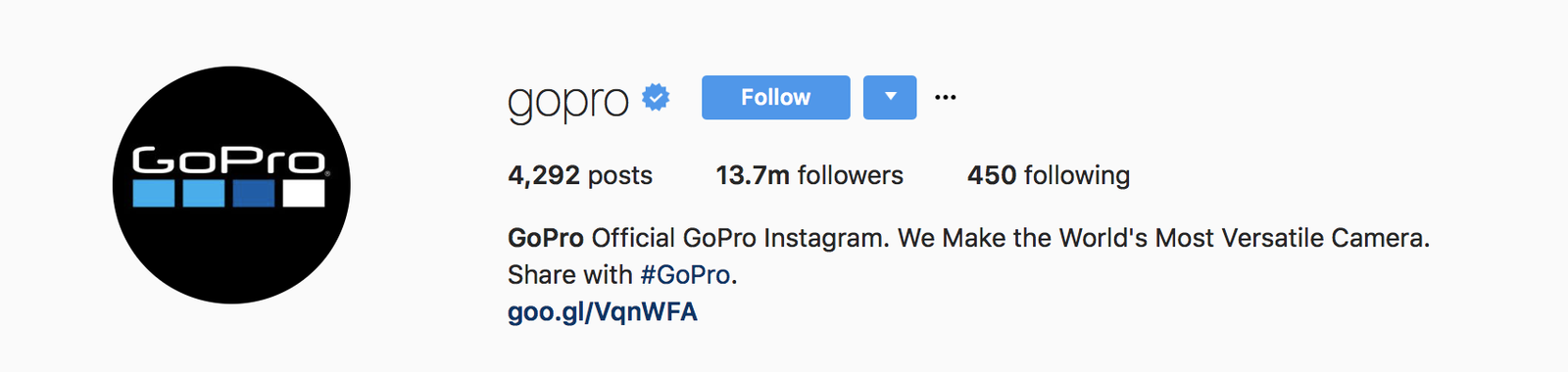
This GoPro bio called its products the "World's Most Versatile Cameras." It tells photographers exactly why they should care, in five words.
For a step-by-step writing process, see how to write the perfect Instagram bio. For more starting points, here's our roundup of creative Instagram bio ideas.
Instagram business bio examples by business type
These templates show how the parts fit together for different kinds of business. Swap the bracketed text for your own details. Each bio is under 150 characters as written, so keep an eye on the count once your real names and places go in. A slash marks a line break.
Cafe, restaurant, or hotel
- Name field: [Brand] | Cafe in [Suburb]
- Bio: Specialty coffee and all-day breakfast in [Suburb] / Open 7am to 3pm, seven days / Order ahead or book a table below
- Link: your ordering or booking page
- Buttons: Directions, plus an Order or Book button if your provider supports it
Retail or ecommerce brand
- Name field: [Brand] | Sustainable activewear
- Bio: Activewear made from recycled fabric / Free returns across the US / New drop every Friday / Tag #[BrandHashtag] to be featured
- Link: the current drop, with your bestsellers and returns policy as extra links
- Buttons: Email
More examples for online stores are in our guide to ecommerce Instagram bios.
Social media or marketing agency
- Name field: [Agency] | Social media agency
- Bio: Social media for hospitality brands in [City] / Content, ads, and community management / Case studies and new projects below
- Link: a case studies page, with an inquiry form as the second link
- Buttons: Email
Multi-location brand or franchise
National account:
- Name field: [Brand] | 24/7 gyms
- Bio: 24/7 gyms in [number] locations across [Country] / Find your local club: @[brand][suburb] / Join online below
- Link: the join page, or a club finder
Location account:
- Name field: [Brand] [Suburb] | 24/7 gym
- Bio: Your local [Brand] in [Suburb] / Part of @[brand] / Class times and a free day pass below
- Link: that location's page, not the national home page
- Buttons: Call and Directions
The national bio points down to the locations, and every location bio points back up. Same structure, local details.
Professional services or B2B
- Name field: [Firm] | Accountants in [City]
- Bio: Tax and advisory for small businesses in [City] / Practical tips every Tuesday / Book a free 15-minute call below
- Link: your booking page
- Buttons: Email and Call
5. Tagline
Does your brand have a well-known motto or tagline? You might use it as your bio.
Take a look at Nike's bio:
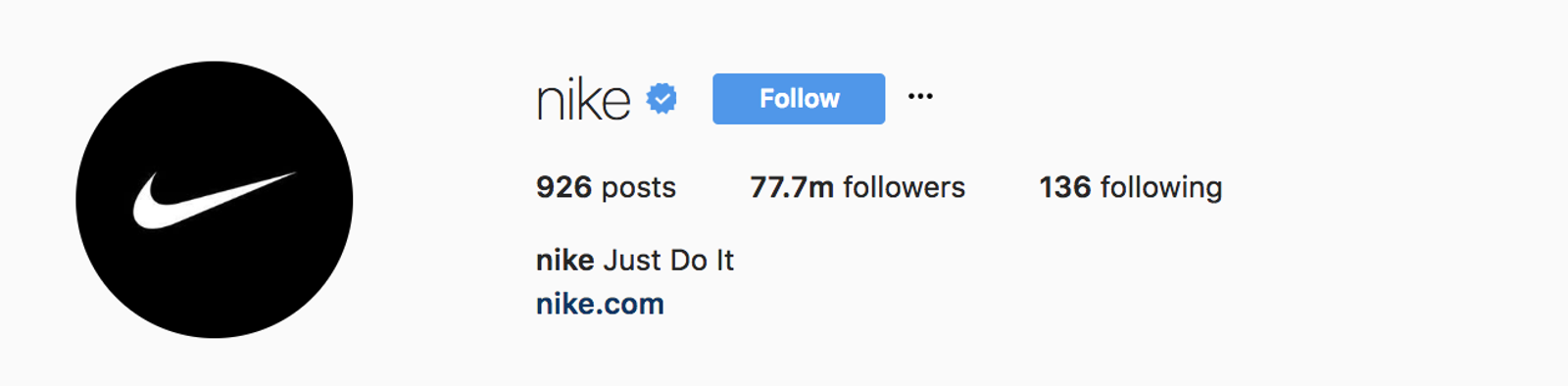
"Just Do It" has been Nike's tagline for decades. It sums up the brand's purpose, history, and identity in three words.
The line suggests that by just doing it (hitting the gym, going for a run, playing the game) customers can reach their fitness goals. It's motivating without trying too hard.
6. Highlight your company's personality
How do you get people to stay on your profile?
A boring brand won't. Show your personality and what you care about. Be clear first and witty second. A few emojis can help, if they suit your brand.
A good test: if your brand were a person, how would you describe them? Casual language suits a younger or more playful audience. If you sell on prestige or exclusivity, a more formal tone fits better. If you manage several brands, write this down for each one so every bio sounds like its own brand, not like you.
Here's a bio that did this well:
Old Navy
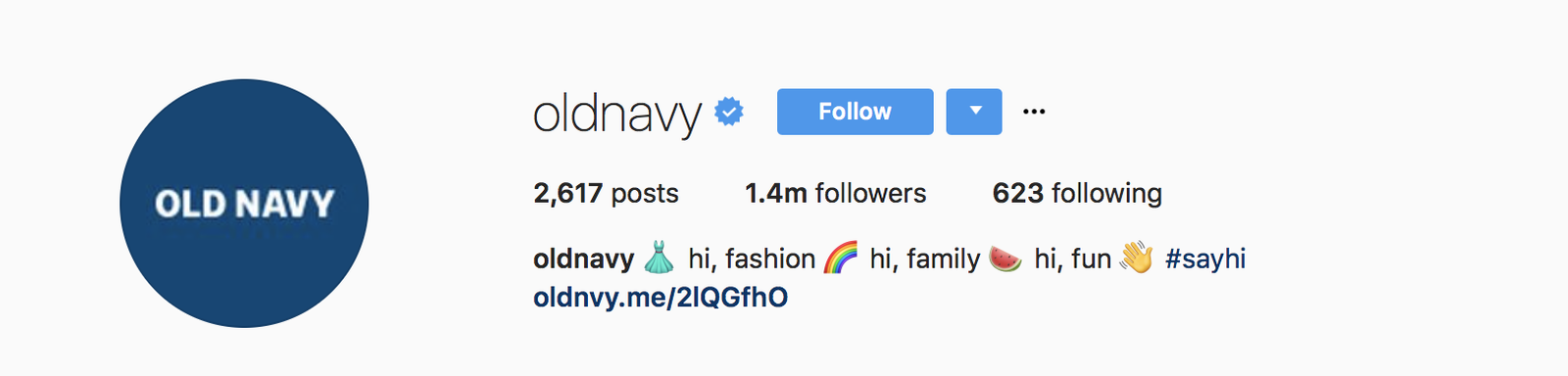
"Hi, fashion; family; fun; #sayhi" were the words on Old Navy's bio, followed by emojis of a dress, a rainbow, a watermelon, and a waving hand.
With a few words and emojis, Old Navy set itself apart from other clothing brands. It came across as fun, inclusive, comfortable, and family friendly: the clothes you wear to the park or out with friends.
7. Adding @ to link to multiple accounts in the bio
Any @username you add to your bio becomes a clickable link to that profile. If your brand runs several Instagram accounts, your bio is the place to connect them.
For brands with sub-accounts for different products, regions, or locations, it's a simple way to send followers to the account that suits them best.
Here are two brands that have done this:
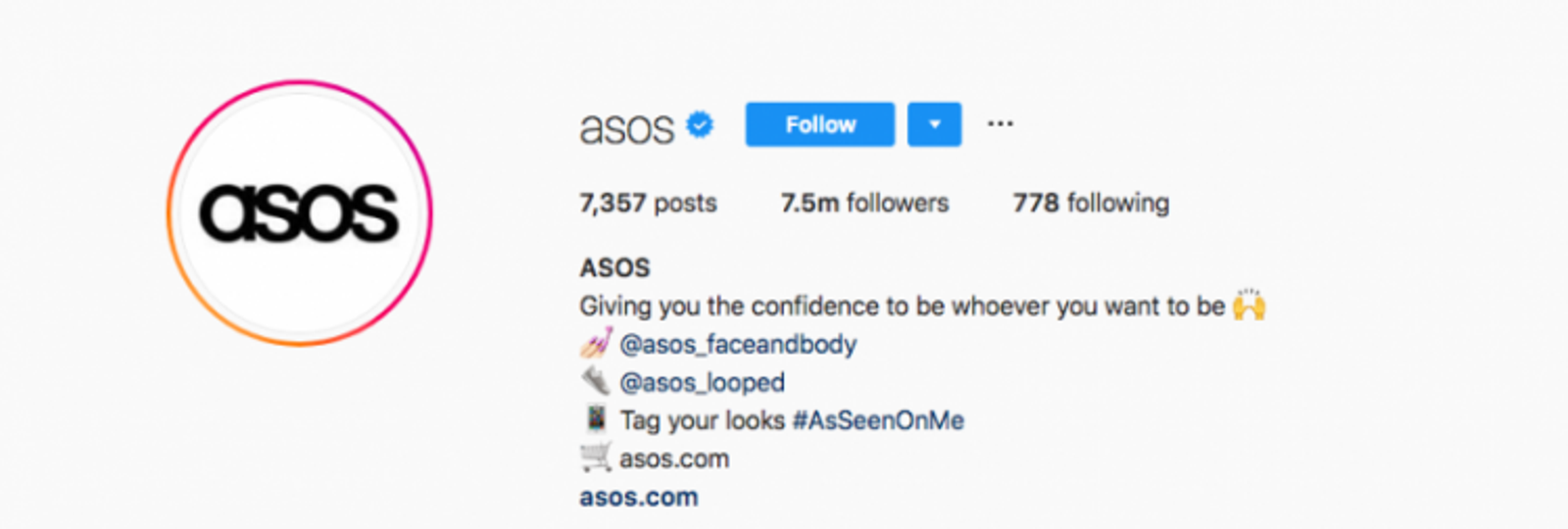
ASOS
ASOS has linked to other branded accounts, such as its sneaker account and its face and body account.
BarkBox
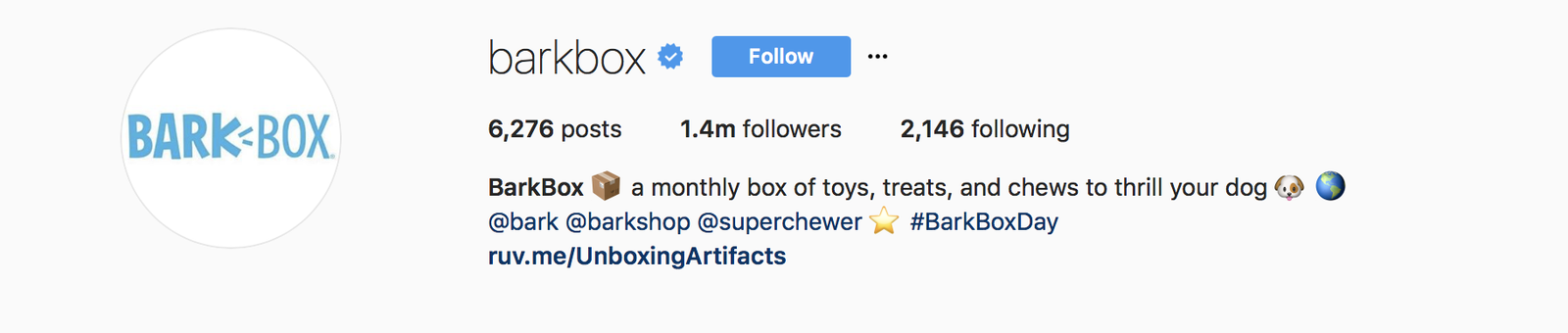
BarkBox has linked to related accounts like @bark, @barkshop for products, and @superchewer for chew toys.
Multi-location businesses can use the same trick in both directions: the national account mentions the main location accounts, and each location mentions the national account. If your brand is on TikTok too, here's how to connect your TikTok and Instagram accounts.
8. Mention your branded hashtag
If you have a branded or campaign hashtag, put it in your bio. Customers who share content about your brand know which tag to use, and visitors can tap it to see what other customers have posted.
For example, Coca-Cola's bio once mentioned only its branded hashtag, #ShareACoke.
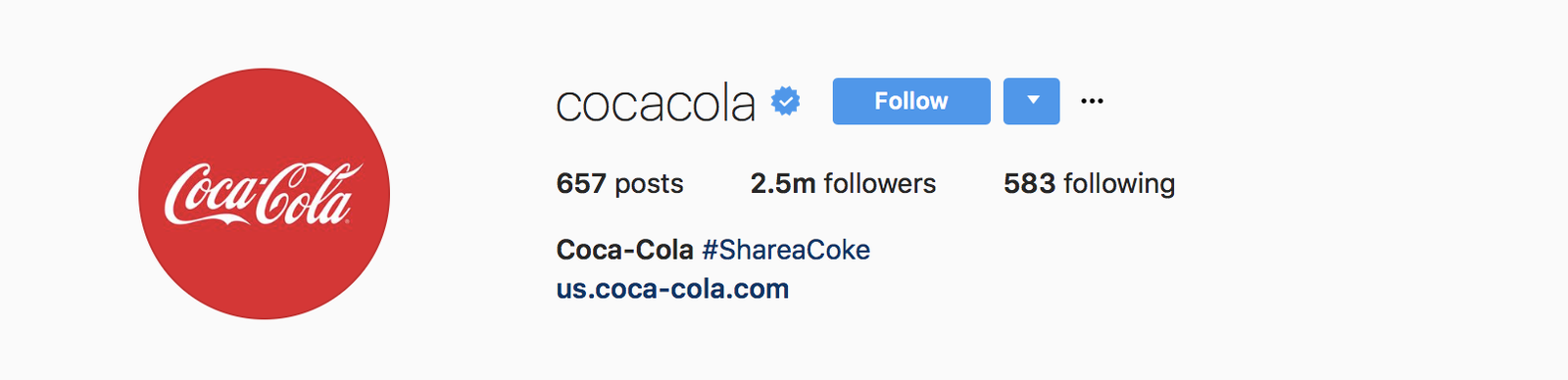
The campaign turned a bottle of Coke into something you share with friends. With #ShareACoke right there in the bio, more customers posted their own photos and browsed everyone else's.
That's the real value of a branded hashtag: a steady supply of user-generated content. If you want to repost a customer's photo on your brand's account, ask first and credit them in the caption. For more on choosing tags, see our hashtag strategy for Instagram Stories.
9. Adding web links with Sked Link
Instagram bios used to allow one link. Since April 2023, you can add up to five links from Edit profile > Links. Only the first one shows on your profile. The rest sit behind an "and more" label that opens a list.
For one brand with one website, five links may be enough. When the link has to change with every campaign, or you need to show a client where their profile traffic went, a link-in-bio page does more. Our guide to links in your Instagram bio covers the options.
Sked Link is Sked Social's link-in-bio page. You build a branded page with your colors and layout, add a button for each destination, and use that one URL in your Instagram or TikTok bio. Add UTM tags to your links so visits show up in Google Analytics, and add the Meta Pixel to retarget the people who click through. Clicks are tracked per link inside Sked Social.
Sked Link is included on every Sked Social plan. To set up the reporting side, here's how to track Instagram traffic in Google Analytics.
10. Contact options
Businesses used to type their email address and phone number into the bio itself. A business account on Instagram can now show contact buttons instead. Go to Edit profile > Contact options to add them.
The buttons take a little attention away from the rest of your bio. The trade-off is that customers can reach you in one tap.
Here's how it looks:
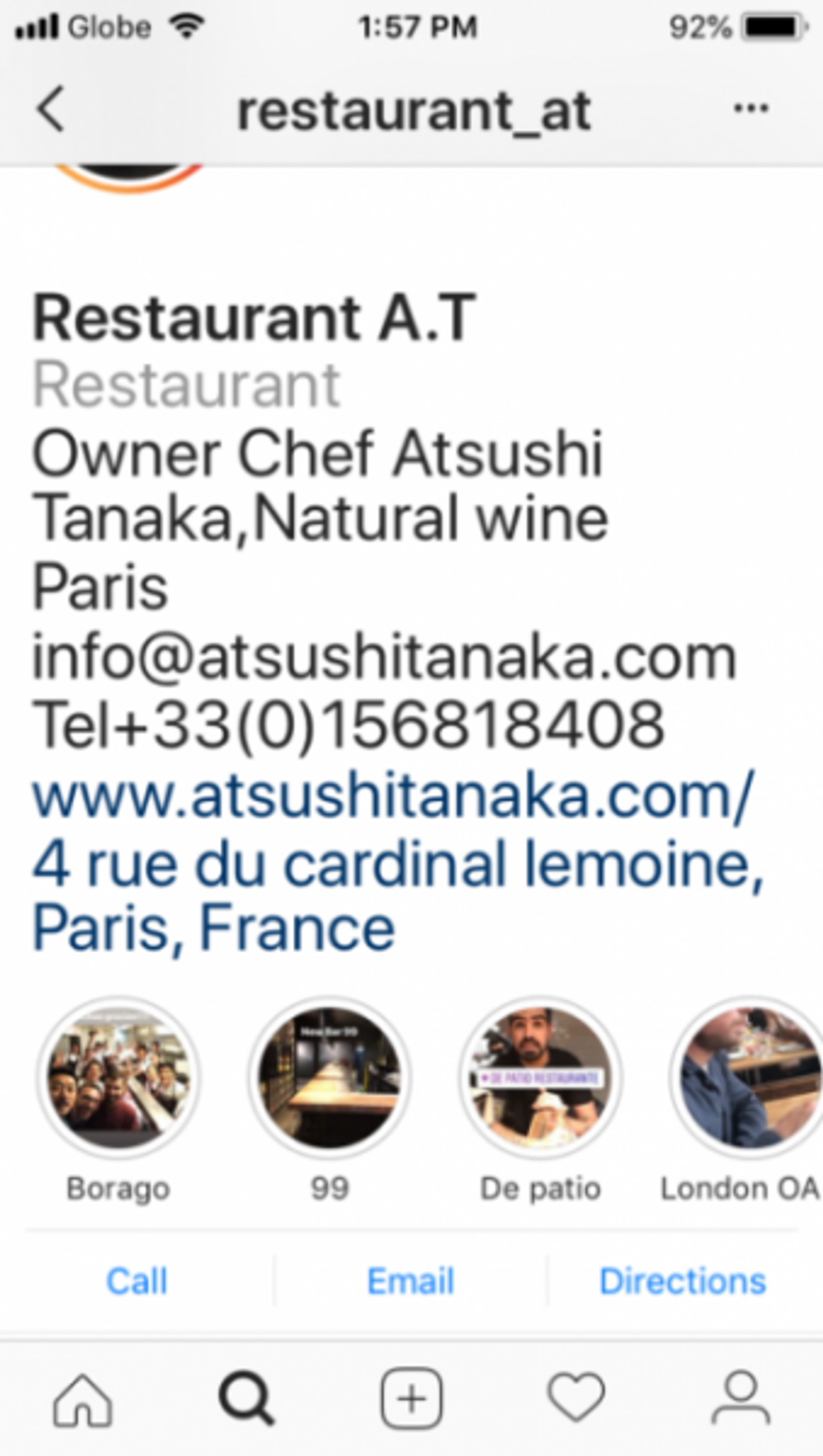
Tapping the email button opens the visitor's mail app, ready to write to you.
Call
If you have a physical store, office, or venue, add your phone number. Tapping the button prompts the visitor to call you.
Directions
Add your business address and the Directions button opens a map on the visitor's phone.
Instagram also offers action buttons, such as Book or Order, through partner services. Here's how to add a call to action button to your Instagram profile. If your bio invites people to message you, have replies ready with these Instagram DM templates for business.
11. Be an official Instagram account
Is your brand famous enough to attract copycats? Are fake accounts posing as you?
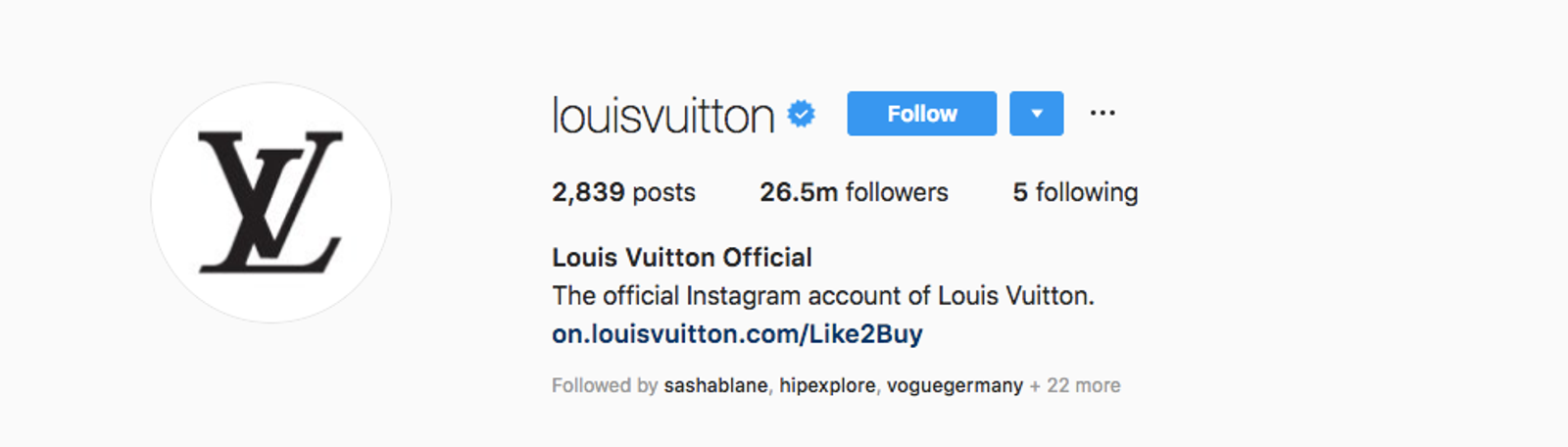
You can say in your bio that your account is the official one. Louis Vuitton's bio did just that. Alongside the verified badge, it made the real account easy to tell from imitators.
If your brand doesn't have a problem with copycats or fan accounts, the word is probably not worth the characters.
12. Use the right category
Professional accounts on Instagram (business and creator accounts) can show a category label directly under the name, such as "Restaurant" or "Marketing agency." Make sure it's the right one for each account.
The right category saves bio characters, because people can see what kind of business you are before they read a word.
You pick a category when you switch to a professional account. To change it later, go to Edit profile and update the category. You can also choose whether the label shows on your profile under Profile display.
13. Use headline keywords
The name field in your bio (the bold line at the top) is searchable on Instagram. Most brands put just their name there. Add a word or two that describes your business, and people searching for it can find your account.
For example, the name field of Juliana's Pizza included "Coal-Fired" and "NY Sired," words that describe exactly what they do. That helps them get found by people looking for coal-fired pizza in New York.
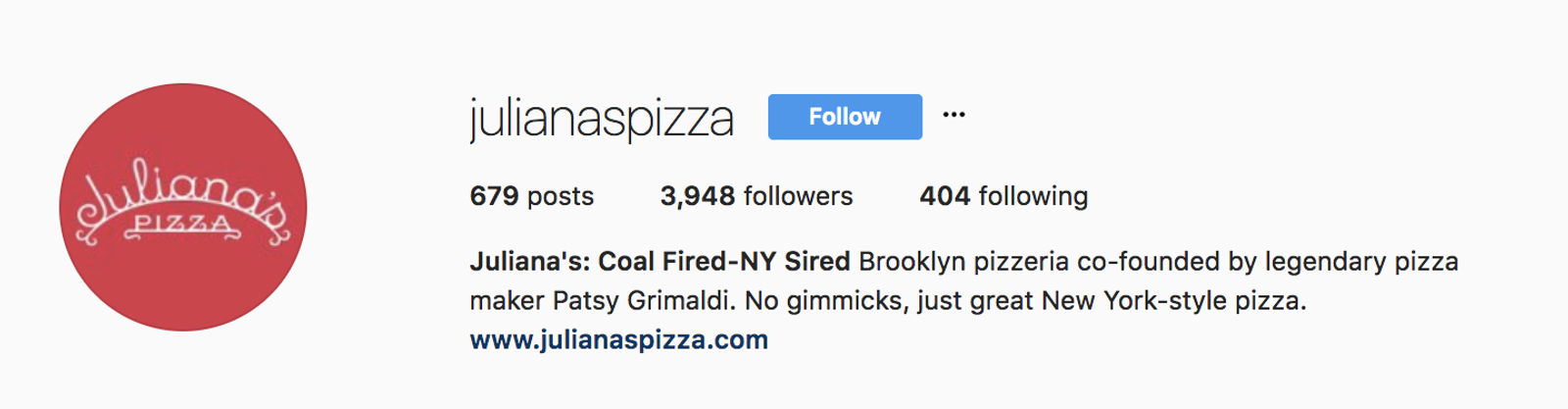
For a multi-location business, put the location in the name field of each location account, such as "[Brand] [Suburb]." That's often what local customers search for.
Building bios that convert, on every account you manage
Writing one bio is easy. Keeping 12 client bios, or 40 location bios, accurate and on-brand is the real job. A few habits make it manageable:
- Keep a bio sheet for each account. One row per account: name field, bio text, links, category, contact buttons, and Highlight covers. Anyone on the team can rebuild a profile from it, and you can spot inconsistencies at a glance.
- Get sign-off like any other post. A bio is public brand copy. Route changes through the same approval step as your posts, so the client or brand lead sees the wording before it goes live.
- Template the structure, localize the details. For multi-location brands, keep the line order and tone the same and change the suburb, hours, handle, and link for each location.
- Tag every link by account. Use UTM tags that name the client or location, so profile traffic reports by account instead of in one lump.
- Plan link changes with the calendar. When a campaign launches, the bio link should change the same day. Put the swap on the content calendar next to the launch post.
- Audit every quarter. Check for dead links, expired offers, old hours, and outdated Highlights. Our 8-step Instagram bio audit is a ready-made checklist.
- Keep access tidy. Edit client profiles only through the access the client has approved, and don't share passwords in chat threads.
For example, an agency with eight hospitality clients might keep one bio sheet, review it every quarter, and swap each bio link on the day a seasonal menu launches. Each link carries a UTM tag with the client's name, so every monthly report shows how much traffic came from the bio.
For a social-first read of how that traffic lands in GA4, try Traffic Snapshot. Running social for several brands? See how agencies work in Sked Social.
Creating an optimized Instagram business bio
...is harder than it looks.
Once your 150 characters are written, keep an eye on how the profile performs. Test your Instagram bio links against each campaign, and update your Highlights based on what your followers actually watch.
Come back to this guide whenever a bio needs a refresh.
If you want to plan, approve, and publish your Instagram content in one place, start your 14-day free trial of Sked Social. No card needed.