En esta página
- Puntos clave
- Proceso de planificación de campañas en redes sociales en 7 pasos
- Plantillas y marcos para campañas en redes sociales
- Consejos de expertos y mejores prácticas del sector
- Principales retos y soluciones en la planificación de campañas en redes sociales
- Transforma la gestión de tus redes sociales con Sked Social
Puntos clave
- Una campaña exitosa en redes sociales empieza con unos objetivos claros y cuantificables y un profundo conocimiento de tu público objetivo
- La elección estratégica de las plataformas y un calendario de contenidos detallado son fundamentales para que la campaña sea coherente y tenga impacto
- Usa plantillas y marcos de trabajo para agilizar la planificación, la ejecución y la elaboración de informes
- La analítica en tiempo real y la escucha social son fundamentales para optimizar las campañas y demostrar el retorno de la inversión
- Sked Social’s Planificación, Programación, Analítica, y Herramientas de IA estas funciones resuelven los problemas más habituales de las campañas
Las campañas en redes sociales ya no son solo «algo que está bien tener»: son la columna vertebral del marketing de marca moderno. Pero con tantas plataformas, tipos de contenido y expectativas del público, improvisar es la mejor forma de malgastar el presupuesto y perder oportunidades. ¿Cuál es la diferencia entre una campaña que se pone de moda y otra que fracasa? Un plan a toda prueba.
Tanto si trabajas por tu cuenta como si formas parte de un equipo de redes sociales, o si gestionas campañas para varios clientes, un enfoque estructurado es tu arma secreta. Esta guía desglosa cada paso, desde establecer los objetivos de la campaña hasta el análisis posterior a la misma, con consejos prácticos, opiniones de expertos y las herramientas más recientes para ayudarte a triunfar en todos los canales.
Proceso de planificación de campañas en redes sociales en 7 pasos
Una campaña exitosa no se basa en la suerte, sino en un proceso. A continuación te explicamos cómo planificar, llevar a cabo y optimizar campañas que realmente marquen la diferencia.
1. Define el objetivo de tu campaña
Every campaign starts with a “why.” Are you aiming for brand awareness, lead generation, sales, or community engagement? Use the SMART framework—Specific, Measurable, Achievable, Relevant, Time-bound—to set goals that are clear and trackable.
Ejemplo:
En lugar de «conseguir más seguidores», prueba con «aumentar los seguidores de Instagram un 20 % en el primer trimestre de 2025».
Consejo de experto:
Vincula el objetivo de tu campaña a un resultado empresarial, no solo a una métrica de vanidad. Por ejemplo, «conseguir 500 clientes potenciales cualificados a través de LinkedIn» es más concreto que «aumentar la interacción».
Lo más destacado de Sked:
Uso Analítica para comparar tu rendimiento actual y fijarte objetivos realistas.
2. Investiga y conoce a tu público objetivo
No puedes dar en el blanco si no lo ves. Crea perfiles detallados de tus clientes: datos demográficos, intereses, problemas y, lo más importante, dónde pasan el tiempo en Internet.
Paso a paso:
- Analiza los datos que tienes sobre tu público (usa Sked’s Analítica (para obtener información sobre varias plataformas)
- Haz una encuesta a tus clientes
- Usa la escucha social para detectar tendencias y opiniones (Escucha social)
- Asigna los perfiles de usuario a las plataformas (por ejemplo, la Generación Z en TikTok, el B2B en LinkedIn)
Ejemplo:
Una cadena de restaurantes podría dirigirse a los amantes de la gastronomía locales en Instagram y a las familias en Facebook, con mensajes adaptados a cada grupo.
3. Elige las redes sociales adecuadas
No todas las campañas encajan en todos los sitios. Elige las plataformas en función de dónde esté más activa tu audiencia y dónde destaque más tu contenido.
Lista de comprobación para la selección de la plataforma:
- Instagram: Narrativa visual, colaboraciones con influencers, publicaciones con opción de compra (Programador de Instagram)
- Facebook: creación de comunidades, eventos, segmentación local (Planificador de Facebook para la programación)
- TikTok: Vídeos cortos, tendencias, retos (Programación de vídeos en TikTok)
- LinkedIn: B2B, liderazgo de opinión, generación de clientes potenciales (Programador de LinkedIn para la programación)
- Perfil de empresa de Google: SEO local, reseñas, actualizaciones (Gestión del perfil de empresa en Google)
Consejo de experto:
Usa Sked’s Publicación cruzada y personalización para adaptar el contenido a cada plataforma en un solo flujo de trabajo.
4. Elabora el mensaje y los elementos visuales de tu campaña
Tu mensaje es el corazón de tu campaña. Debe ser claro, coherente y adaptado al estilo de cada plataforma.
Paso a paso:
- Elabora un mensaje central para la campaña (la «gran idea»)
- Adapta el tono y los elementos visuales a cada canal
- Usa plantillas para que todo quede uniforme (Plantillas de entradas y programación del primer comentario)
- Planea una combinación de formatos: imágenes, vídeos, Stories, Reels, carruseles y encuestas
Ejemplo:
Una campaña de lanzamiento de un producto podría incluir vídeos teaser en TikTok, historias con imágenes del «detrás de las cámaras» en Instagram y publicaciones de liderazgo de opinión en LinkedIn.
Lo más destacado de Sked:
Aprovecha Generación de contenido mediante IA para ideas de pies de foto, sugerencias de hashtags y temas principales.
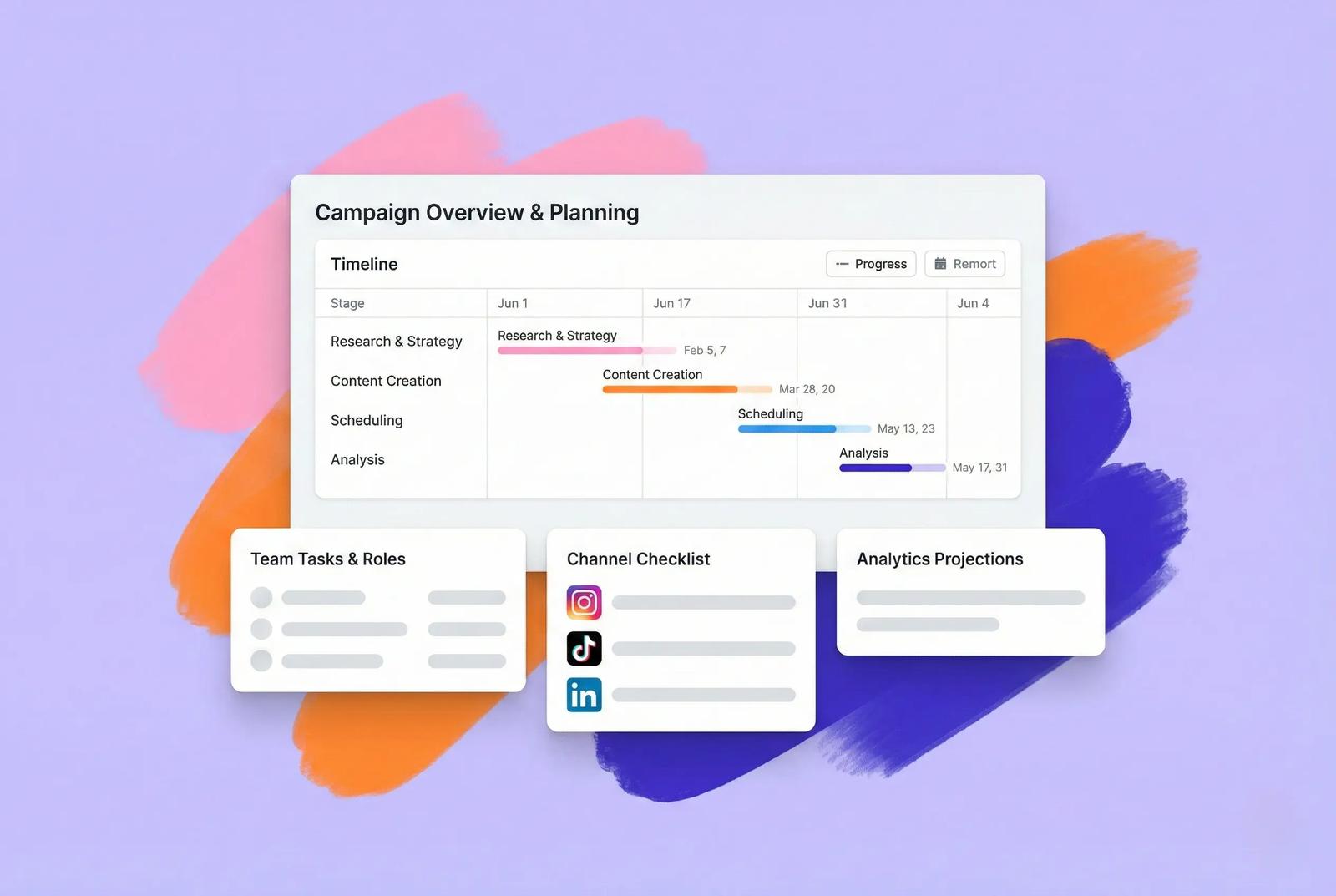
5. Elabora un calendario de contenidos detallado
Un calendario de contenidos es el GPS de tu campaña. Mantiene a tu equipo bien coordinado, evita las prisas de última hora y garantiza un flujo constante de contenidos.
Cómo construir uno:
- Planifica las fechas clave de la campaña (lanzamiento, momento álgido, cierre)
- Programa las publicaciones para cada plataforma (Calendario visual)
- Asigna tareas y plazos a los miembros del equipo (Colaboración)
- Incluye flujos de trabajo de aprobación para el control de calidad (Aprobaciones)
Consejo de experto:
Usa Sked’s Programación masiva y publicaciones ilimitadas planificar con semanas o meses de antelación.
6. Lanzar, supervisar e interactuar
Lanza la campaña, pero no la dejes en suspenso. Las mejores campañas son dinámicas, con interacción y optimización en tiempo real.
Paso a paso:
- Lanza tu campaña en todos los canales previstos
- Supervisa el rendimiento a diario (interacción, alcance, opinión)
- Responde rápido a los comentarios y mensajes (Bandeja de entrada social unificada)
- Adapta el contenido o el presupuesto en función de lo que esté funcionando
Ejemplo:
Una marca que organice un reto con hashtag en TikTok debería responder a los vídeos de los usuarios, compartir las mejores participaciones y ajustar el mensaje si la interacción no acaba de arrancar.
7. Medir, informar y optimizar
Si no puedes medirlo, no puedes mejorarlo. El análisis posterior a la campaña es donde demuestras el retorno de la inversión y aprendes para la próxima vez.
Qué hay que seguir:
- Índices de interacción (me gusta, comentarios, compartidos)
- Alcance e impresiones
- Porcentajes de clics (CTR)
- Conversiones (clientes potenciales, ventas, registros)
- Sentimiento y menciones de la marca
Cómo informar:
- Usa Sked’s Informes Custom y períodos de comparación para archivos PDF listos para el cliente con un solo clic
- Compara los resultados con tus objetivos iniciales
- Destaca los logros, las lecciones aprendidas y los próximos pasos
Consejo de experto:
Automatiza la generación de informes con Informes automáticos por correo electrónico y compartir enlaces para mantener informadas a las partes interesadas.
Plantillas y marcos para campañas en redes sociales
Las plantillas te ahorran tener que ir a ciegas a la hora de planificar una campaña. Aquí tienes algunas plantillas imprescindibles:
- Plantilla de resumen de campaña: objetivos, público objetivo, mensajes clave, plan de contenido, indicadores clave de rendimiento (KPI), presupuesto, calendario y funciones
- Plantilla de calendario de contenidos: plataforma, tipo de publicación, fecha/hora, responsable, estado, aprobaciones
- Plantilla de informe: objetivos, métricas, gráficos, conclusiones y recomendaciones
Descarga más recursos:
Echa un vistazo a la Sked Social Centro de conocimiento para conseguir plantillas y guías gratis.
Consejos de expertos y mejores prácticas del sector
- Establece objetivos de campaña que estén directamente relacionados con los resultados del negocio
- Toma todas tus decisiones basándote en datos, no en conjeturas
- Reutiliza el contenido que mejor funciona en todas las plataformas
- Programa las publicaciones para las horas de mayor interacción (Los mejores momentos para publicar)
- Colabora con influencers y aprovecha el contenido generado por los usuarios
- Ten siempre un plan de contingencia: supervisa la opinión de los usuarios en tiempo real (Gestión de la reputación)
- Mantén a tu equipo bien coordinado con Flujos de trabajo de aprobaciones y Vista previa del calendario sin necesidad de iniciar sesión
Principales retos y soluciones en la planificación de campañas en redes sociales
Reto: Cuellos de botella en los contenidos y retrasos en las aprobaciones
Solución: Usar Flujos de trabajo personalizables y Comentarios y notificaciones en tiempo real para que todo siga su curso.
Reto: Voz de marca inconsistente en las distintas plataformas
Solución: Aprovechar Plantillas de entradas y Generación de contenido asistida por IA para que los mensajes se ajusten a la imagen de marca.
Reto: Demostrar el retorno de la inversión a las partes interesadas
Solución: Usar Seguimiento del rendimiento multicanal y Informes Custom para ver los resultados.
Problema: Mensajes perdidos y tiempos de respuesta lentos
Solución: Centralizar la interacción con Bandeja de entrada social unificada.
Preguntas frecuentes sobre la planificación de campañas en redes sociales
¿Cuáles son los pasos fundamentales para planificar una campaña en redes sociales?
- Fíjate objetivos claros y cuantificables
- Investiga a tu público
- Elige las plataformas adecuadas
- Elabora tu mensaje y tus elementos visuales
- Crea un calendario de contenidos
- Poner en marcha y captar la atención
- Mide y optimiza
¿Cómo elijo la mejor plataforma para mi campaña?
Analiza dónde pasa el tiempo tu público, el tipo de contenido que vas a crear y los objetivos de tu campaña. Usa herramientas específicas de cada plataforma, como Programador de Instagram o Programador de LinkedIn para la programación para conseguir el máximo impacto.
¿Cómo mido el éxito de una campaña?
Haz un seguimiento de la interacción, el alcance, el CTR, las conversiones y la opinión. Usa Analítica para obtener información en tiempo real e informes automáticos. te informo
¿Cuál es la mejor forma de mantener a mi equipo en sintonía?
Usa un calendario de contenidos, asignar roles y configurar flujos de trabajo de aprobaciones. Sked Social’s Colaboración Las herramientas hacen que todo esto sea muy sencillo.
Transforma la gestión de tus redes sociales con Sked Social
Campaign planning doesn’t have to be overwhelming. The biggest pain points—content chaos, missed deadlines, inconsistent messaging, and unclear ROI—are solved with the right tools. Sked Social brings everything together:
- Planifica y visualiza campañas con El planificador de ideas de Sked
- Programación y publicación automática en todas las plataformas principales (Programación)
- Colabora con permisos basados en roles y flujos de trabajo de aprobaciones Custom (Colaboración)
- Haz un seguimiento del rendimiento y demuestra el retorno de la inversión en tiempo real Analítica)
- Potencia la creación de contenido con Herramientas de IA y Escucha social)
¿Estás listo para transformar tu flujo de trabajo en las redes sociales? Empieza tu prueba gratuita hoy mismo, sin necesidad de tarjeta de crédito.